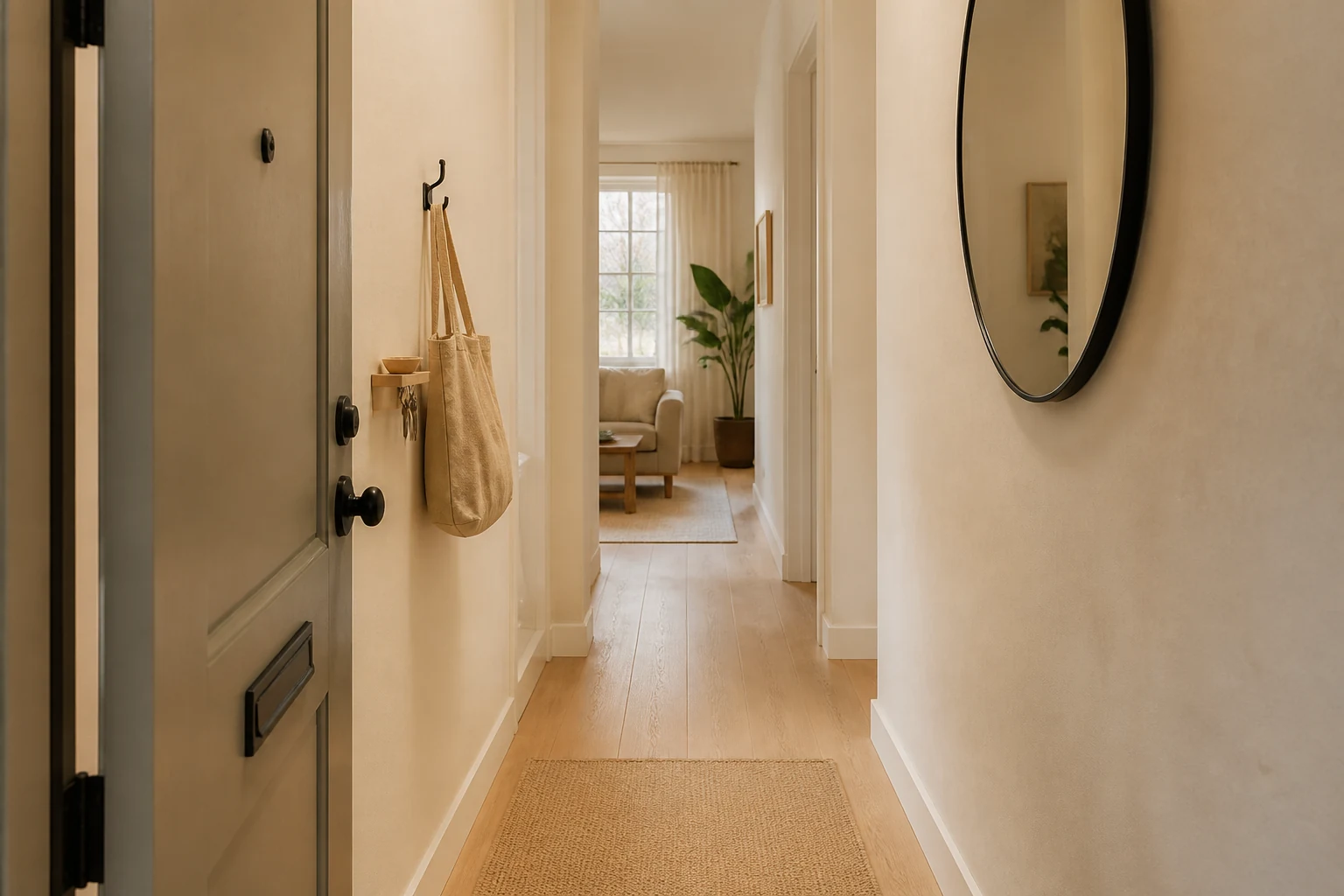
A narrow entryway doesn't need a slimmer console table. If furniture catches your hip, blocks the door, or makes you turn sideways with a shopping bag, leave the floor alone.
The entrance can still hold keys, deal with a daily coat, and look finished. Those jobs just need to move to the wall or the nearest useful surface.
Jump to a section
01
Test the route before adding anything
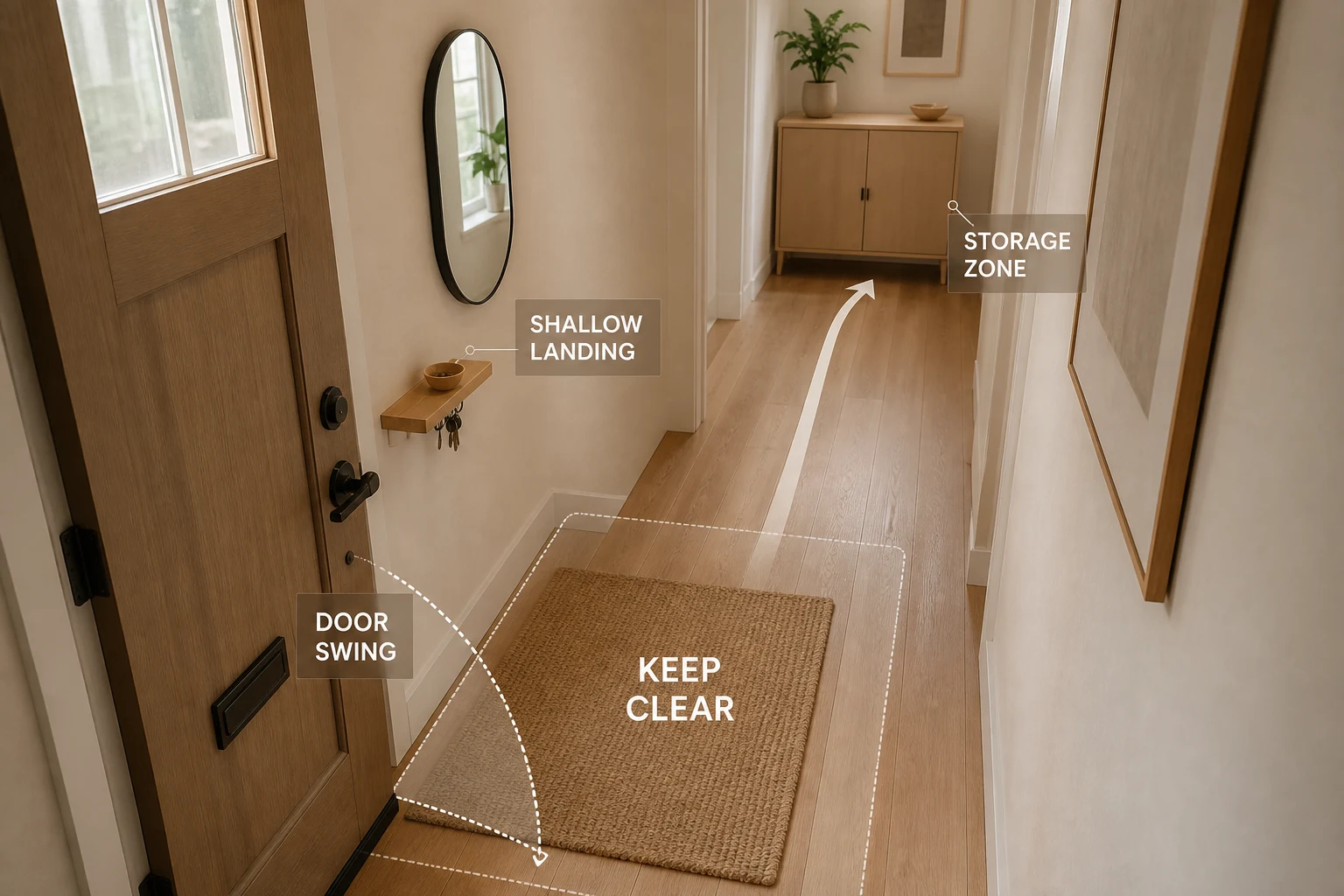
Open the front door fully and walk through the entrance as you use it every day. Carry a bag or laundry basket. Put on a coat. Let someone pass in the opposite direction. Include children, pets, or mobility aids that are part of the household routine.
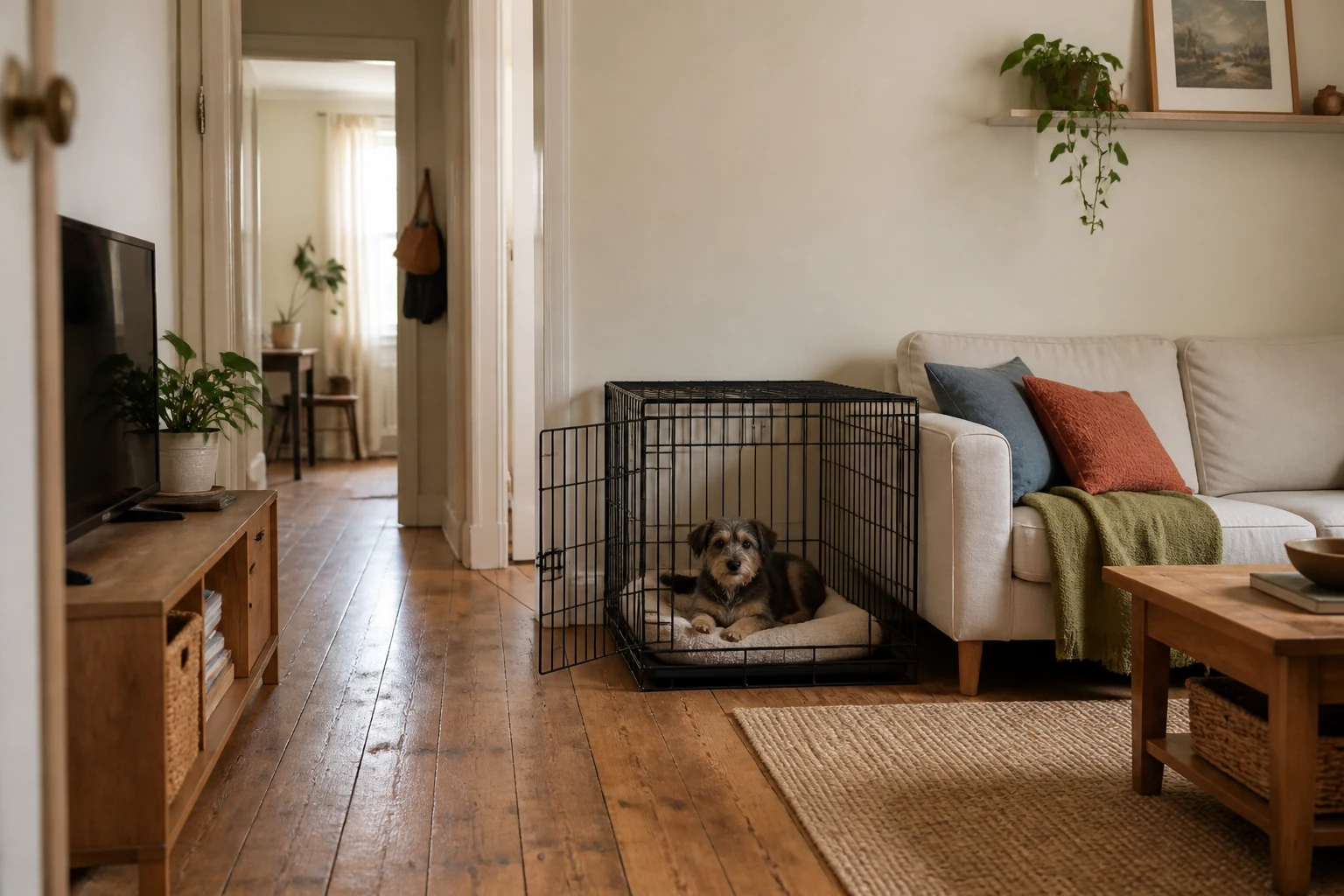
Mark the full footprint of a shelf, shoe cabinet, or other object with painter's tape or flattened cardboard. Test it with the door open and with someone standing inside the entrance. A 10-inch-deep table can look slim on a product page and still be irritating beside a radiator, stair, or second doorway. The same full-footprint test is useful when placing a dog crate in a small living room, where the open door and cleaning access also need room.
Remove the outline if you have to sidestep it, catch a bag on the corner, or lose the spot where you naturally stand to close the door. There is no single clearance number that suits every entrance. If the taped shape gets in the way during the test, that piece is too deep for that spot.
02
Choose the entryway's main job
A narrow entrance can't do everything a full foyer does. Decide which daily annoyance deserves the limited space, then let less urgent storage happen elsewhere.
| If the main problem is... | Start with... |
|---|---|
| keys or sunglasses get lost | a shallow wall tray or the nearest drawer |
| the wall looks unfinished | one mirror or substantial piece of art |
| a daily bag or coat lands on the floor | a short hook rail outside the shoulder line |
| shoes collect beside the door | storage beyond the arrival zone |
| the front door opens straight into another room | a flat mat, light, or contained paint color |
Solve the problem that happens most often. A mirror won't fix a shoe pile. A row of hooks won't help if the entrance only needs a visual focal point.
03
Make a landing spot without a console table
A landing spot can sit on the wall, in the nearest drawer, or on furniture just beyond the tightest part of the entrance. It doesn't have to be beside the door to work.
Use a shallow tray or key rail for keys, sunglasses, and a small amount of mail. Check its total projection after items are hanging from it, not just the depth of the empty organizer. Look for conflicts with the door edge, handle, light switch, and whatever your shoulder or bag passes on the way in.
One example is the GTK Wall-Mounted Key Holder, which is 9.65 inches wide and projects 1.73 inches from the wall. It has six hooks and a narrow tray. The listing contradicts itself about weight capacity, so keep it to keys and other light items. Screws are the safer mounting choice when the wall and the manufacturer's instructions allow them.
If the wall is unsuitable, stop trying to force a drop zone onto it. A bowl in the nearest drawer or a tray on an existing cabinet may work better. The same approach appears in the guide to nightstand alternatives for a small bedroom: borrow a nearby surface before buying something that crowds the route.
Renters should be skeptical of "damage-free" mounting claims. Paint, surface condition, humidity, load, and removal technique can all affect the result. Follow the instructions for the exact mount, and don't place anything fragile underneath an adhesive fitting.
04
Decorate the wall, not the floor
One well-scaled element usually looks calmer than a collection of tiny shelves, baskets, signs, and frames.
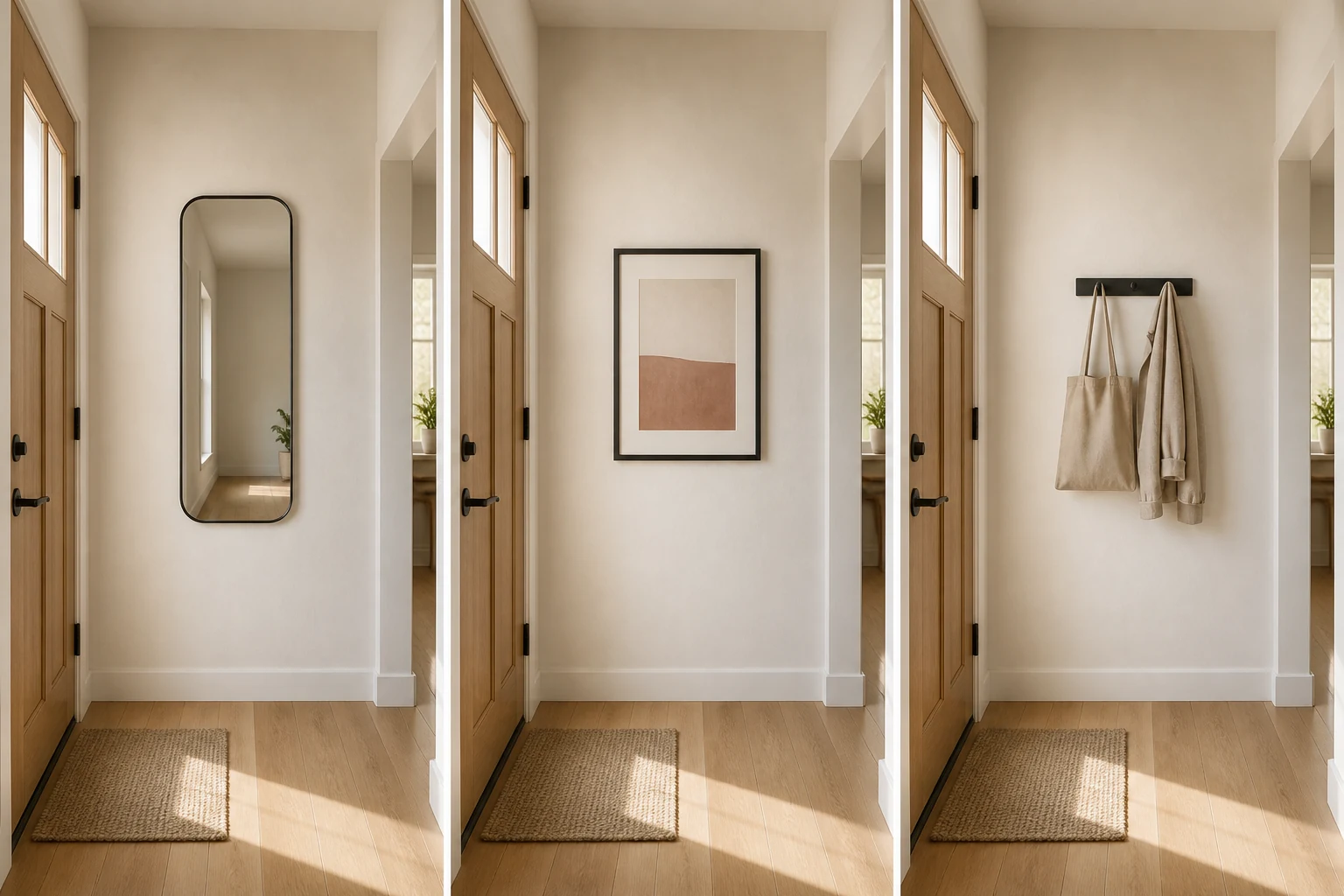
- Choose a mirror when you want a final check before leaving or need to return some light to a dark entrance. Check what it reflects before deciding where to hang it.
- Choose artwork when the wall needs character but no extra function. Size it for the uninterrupted part of the wall rather than centering it across doors and switches.
- Choose a short hook rail when one or two daily items need a home. Move the rest of the household's coats and bags to proper storage.
Repeat a color, wood tone, metal finish, or textile from the adjoining room. The entrance will look connected without needing its own decorating theme.
05
Define the entrance with a mat, light, or paint
A front door that opens into a living room may need a visual boundary more than it needs storage. A mat, wall light, or contained area of color can mark the entrance without building a barrier between the door and the room.
A mat should lie flat, stay put, and clear the bottom of the door. The U.S. Consumer Product Safety Commission's home safety checklist advises keeping walking surfaces flat, slip resistant, and free of objects, including in entryways that may become wet. Use a suitable non-slip pad where needed and remove a rug that shifts, curls, or catches the door.
One example is the LUMI Ultra-Thin Indoor Door Mat, sold in a 17-by-30-inch version that is 0.14 inches thick and has a rubber backing. Test it with the door fully open. Its listing calls for vacuuming, shaking, or rinsing rather than machine washing.
A warm wall light can help a dark passage, but the fitting still needs to stay clear of shoulders and bags. Check its depth, mounting method, charging access, and cord route. Hardwired lighting requires appropriate electrical work.
Paint is the lowest-profile option. Try the inside of the door or one contained wall section, using a color that already appears in the adjoining room.
06
Adjust the plan to the room
In a narrow hallway
Keep the longest route open. Put a mirror or artwork on the largest uninterrupted wall, then move shoes and occasional outerwear farther down the hall or into a closet. Add a key holder near the door only if it stays outside the line of travel.
When the door opens into the living room
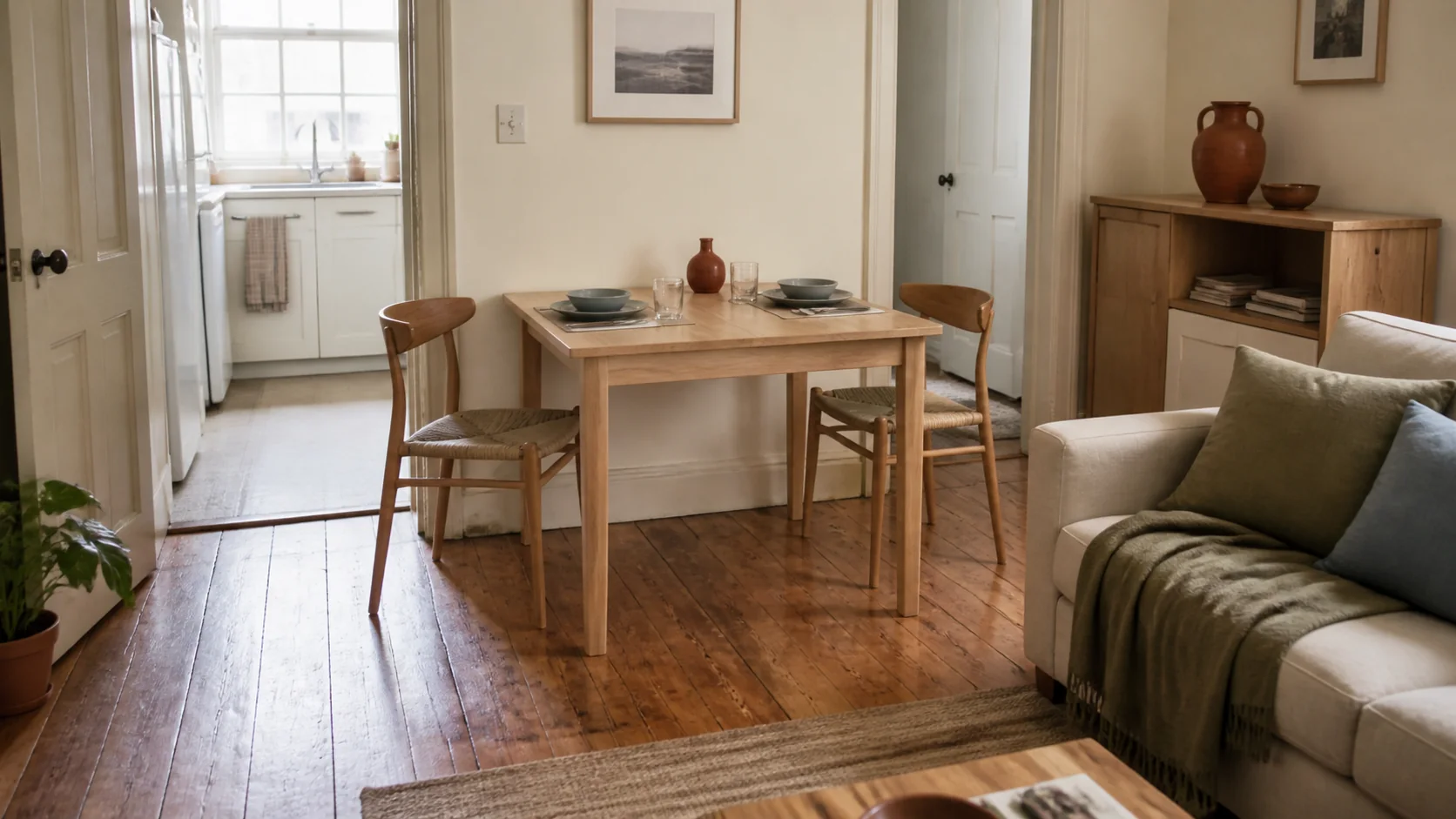
Use the back of the sofa, an existing drawer, or a nearby cabinet as the landing point. A mat and one repeated color can make the door feel like its own zone without dividing the room. If the area also needs a dining spot, test the table and occupied chair space using the method in the small-apartment dining guide.
Around stairs, doors, or a radiator
Work with the usable wall section instead of centering an arrangement across the whole room. Keep doors and heat sources unobstructed, then place storage on the stair wall or beyond the interruption.
07
What to leave out
- Skip an over-the-door organizer if its bracket changes how the front door closes, locks, or seals, or if its hooks hit the wall when the door opens.
- Don't shrink every feature of a large foyer. A tiny console, mirror, lamp, basket, and plant can create more clutter than one properly scaled piece.
- Keep shoes, plants, umbrella stands, and spare baskets out of the arrival zone. Empty floor is doing a job when it lets you enter, close the door, and put down a bag without twisting around furniture.