A crate that fits between two pieces of furniture can still make a small living room hard to use. It might interrupt the path to a door, crowd the sofa, or turn every trip with a laundry basket into a sideways shuffle.
If your dog already uses the crate willingly, do not begin by replacing it with prettier furniture. Start with the room you have. Find a position that works for the dog, the household route, and regular cleaning. Then decide whether the crate needs to look quieter.
01
Test the crate's full working footprint once
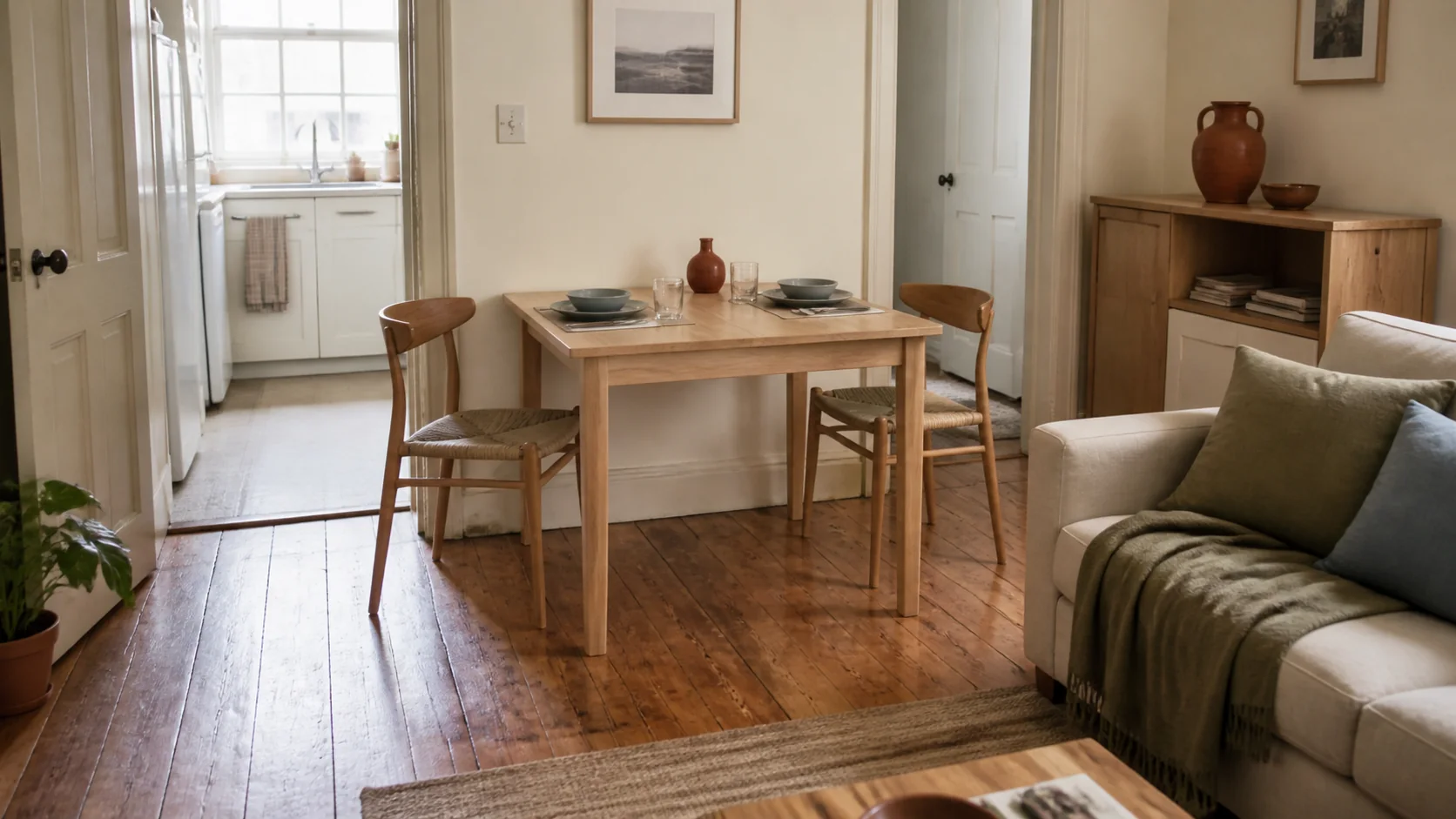
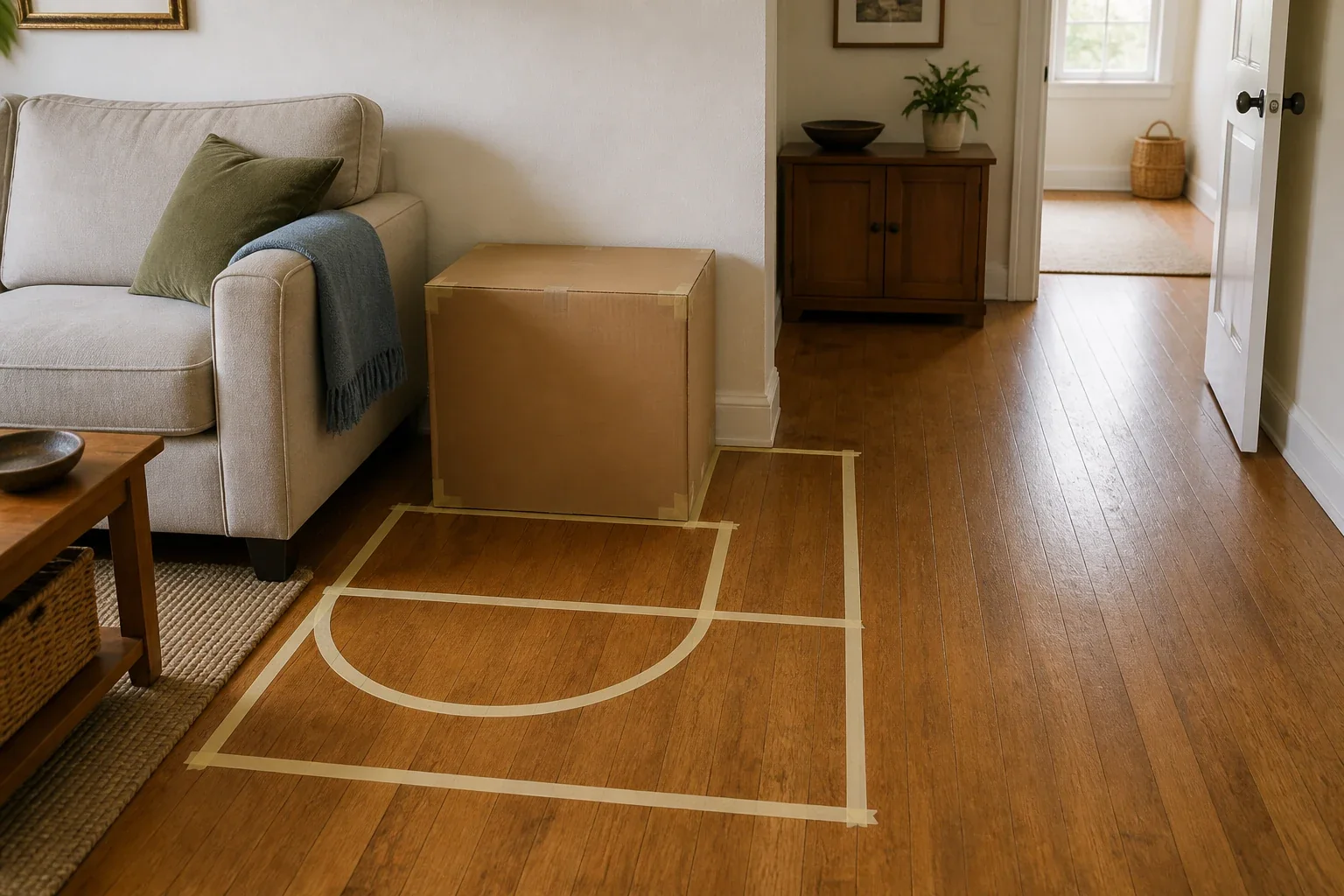
Measure the crate's outside length and depth, then mark that footprint on the floor with painter's tape. A cardboard box of similar size also works. Add the open door and the space needed to remove the tray. If the crate has a door on one side, that side must remain usable. This taped outline also works when a small apartment needs an eating place.
- Walk every route you use often, including the path to nearby doors.
- Sit on the sofa and pull out any chair that needs moving room.
- Open adjacent doors, drawers, and cabinets.
- Carry laundry or a full basket past the marked area.
- Rehearse removing the tray, vacuuming behind the crate, and wiping the floor around it.
No single clearance number suits every small living room. The placement fails if someone has to step over the crate, turn sideways beside the sofa, move it to clean, or close its door so another door or drawer can open. Cross out any spot that fails before comparing how the crate looks there.
02
Choose a spot that works for the dog as well as the room
Write down what the crate does in your home now. It might be the dog's resting place, a temporary management tool, or a familiar spot during guest visits. For some households, it is simply equipment that lives in the living room.
For a dog that already settles comfortably in the crate, staying near the household may be more useful than being tucked into an isolated corner. Multnomah County Animal Services lists the living room, family room, and kitchen as common crate locations because the dog can remain part of normal household activity. That is a starting point, not a rule for every dog or home. Its crate-training guidance also recommends introducing the crate gradually instead of relying on placement alone.
Too much activity creates a different problem. A quieter position may suit a dog better when people pass close by, the television is loud, or an exterior door opens beside the crate. Look for a place connected to household life but outside the busiest route.
Check the physical conditions. The ASPCA recommends a warm, quiet resting place away from drafts in its general dog-care guidance. Check direct sun, heating and air-conditioning vents, exterior doors, and cold floors before settling on a corner.
Then watch the dog. The ASPCA notes that crating can increase stress for some dogs. Heavy panting, excessive salivation, frantic attempts to escape, or persistent vocalizing call for a closer look at the arrangement. Its separation-anxiety guidance explains why confinement does not suit every dog. Room planning cannot replace individual behavior advice, and a decorative crate is not a solution to distress.
03
Compare the placements that fit daily life
Most small living rooms offer only a few plausible positions. Use the full-footprint test to rule out the ones that interfere with daily movement.
Beside the sofa
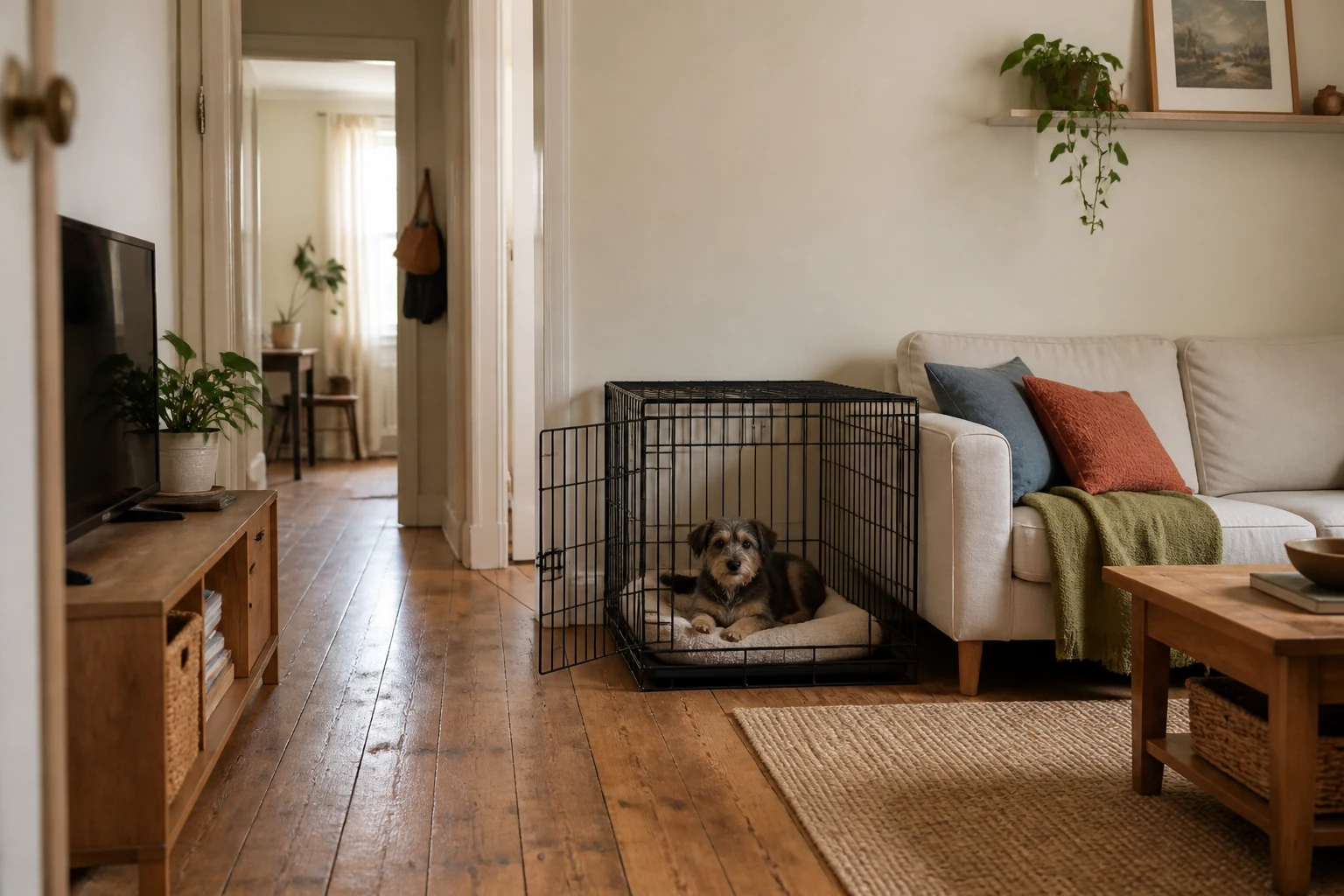
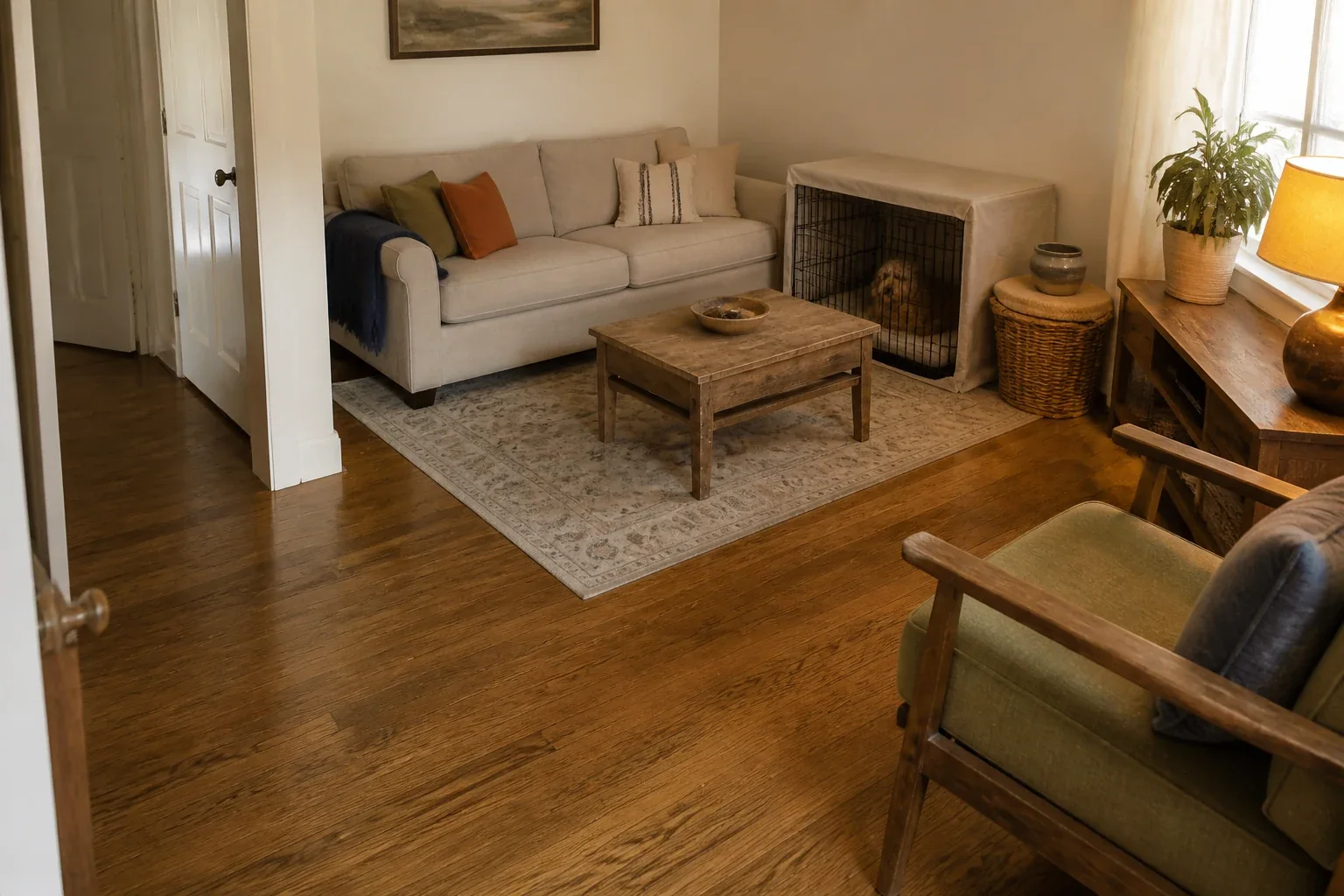
Beside the sofa keeps the dog near the household, and the sofa gives the crate a visual boundary. The arrangement is easier to live with when the crate ends near the sofa arm instead of jutting into the route to the television or coffee table.
The door should open without meeting someone's feet. Keep bags, shoes, loose blankets, and drinks out of the narrow space around it. A bare spot becomes a bottleneck once the day's belongings collect there.
Along a wall or in a corner
Against a wall, people do not have to walk around every side of the crate. A corner works when it stays connected to the room and leaves access for cleaning.
Do not wedge the crate against a radiator, vent, exterior door, or furniture that has to move. If pulling the tray means dragging the crate forward and shifting the sofa, the corner has failed the working-footprint test. A deeply hidden position is also a poor trade when it cuts the dog off from ordinary household activity.
In another active room
Sometimes the living room has no workable position. Check a kitchen, family room, office, or nearby open area for the same household connection with fewer conflicts. Apply the same footprint, route, cleaning, and dog-response checks there.
Putting the crate out of sight is not much of a solution if it becomes awkward to use or leaves the dog isolated. Choose the room that supports the routine rather than forcing the crate onto the last strip of living room floor.
After moving one less useful piece
If every position blocks a route, temporarily remove a rarely used accent chair, oversized basket, side table, or redundant storage piece. Live with that change before buying a different crate. This will show whether the furniture around it is the problem. The narrow-entryway guide uses a similar rule: keep the daily route clear before adding storage or furniture.
04
Make a sound placement feel settled
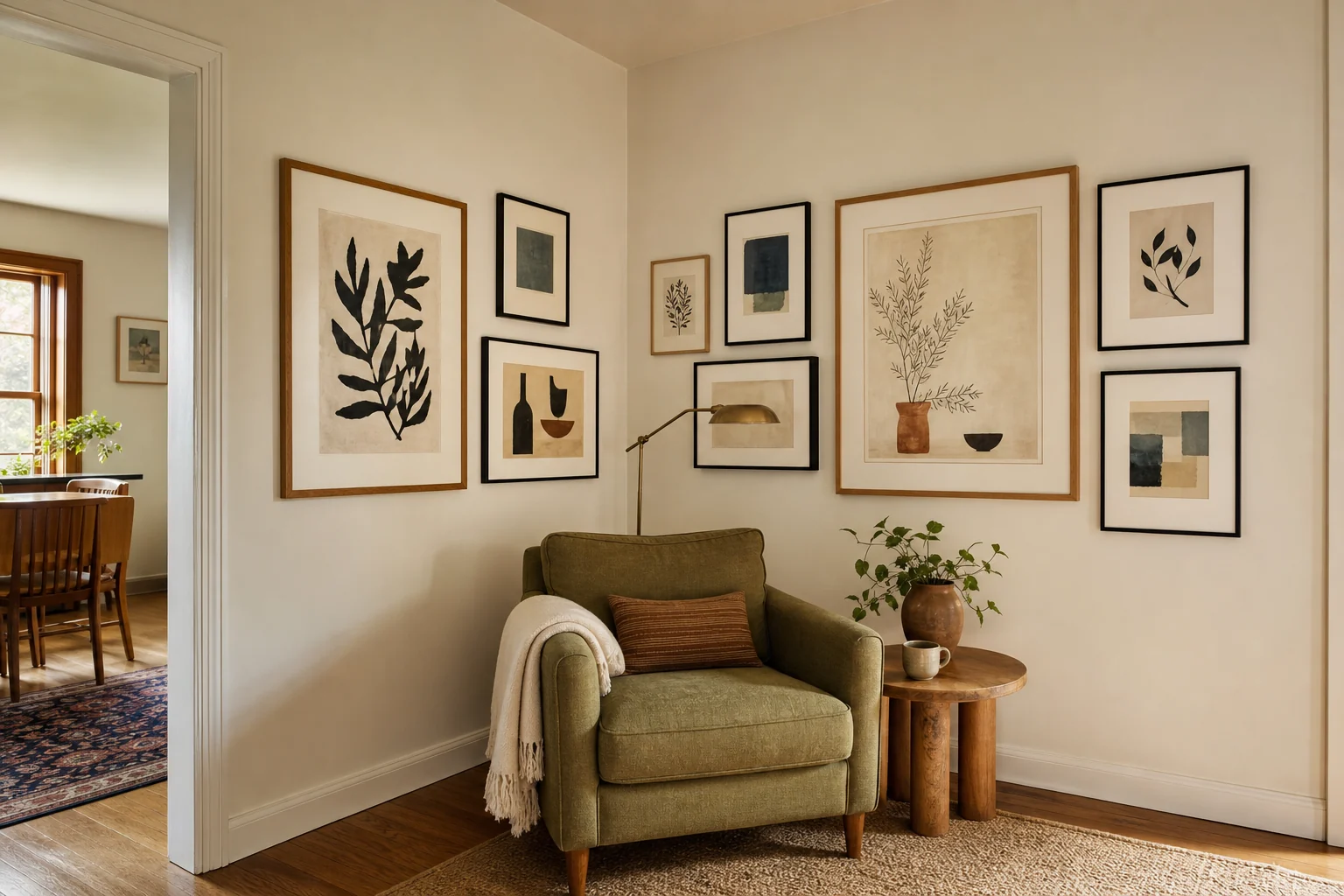
Once a location passes the practical test, use the room's existing lines to make the crate look deliberate. Align it with the sofa edge, media console, or another strong horizontal line. That looks calmer than leaving it a few inches forward or at an unrelated angle. Keep the area simple so access does not disappear under bags or decor. Once the placement works, planning a corner gallery wall can finish the area without adding more furniture to the floor.
A compatible cover can soften the look of an existing wire crate, but it cannot repair a blocked route or a drafty position. Follow the manufacturer's instructions and keep every door and access point clear. Any added surface should be stable, cleanable, and free from interference with the crate. The dog's acceptance matters as much as the room's appearance.
05
Replace the crate only when its design solves a room problem
A furniture-style crate is justified when it solves a documented problem with door orientation, awkward depth, tray access, or a finish clash. A different exterior is not enough if the new piece still blocks the route or makes the floor harder to clean.
The Explore Land Dog Crate Cover shows why variant checking matters in this category. According to the listing, it has polyester construction, two entrance doors, and a mesh window, and it fits most standard 42-inch wire crates, not every crate. The listing contains multiple sizes and colors. The selected black variant is 42 x 28 x 30 inches, and this is a cover-only product. Measure your crate, then reselect the correct size and color variant before ordering.
The MAHANCRIS 31.5-inch dog crate furniture is one example with a different door arrangement. Its listing states a 31.5 x 21.7 x 24.8-inch exterior, front and side doors, metal-frame ventilation, assembly details, and a claim that the tabletop holds 100 pounds. The listing's stated internal width repeats the full exterior width, so do not treat that internal dimension as reliable. Confirm the actual interior dimensions and floor-cleaning access with the seller or manual before ordering. The listing does not specify a removable tray.