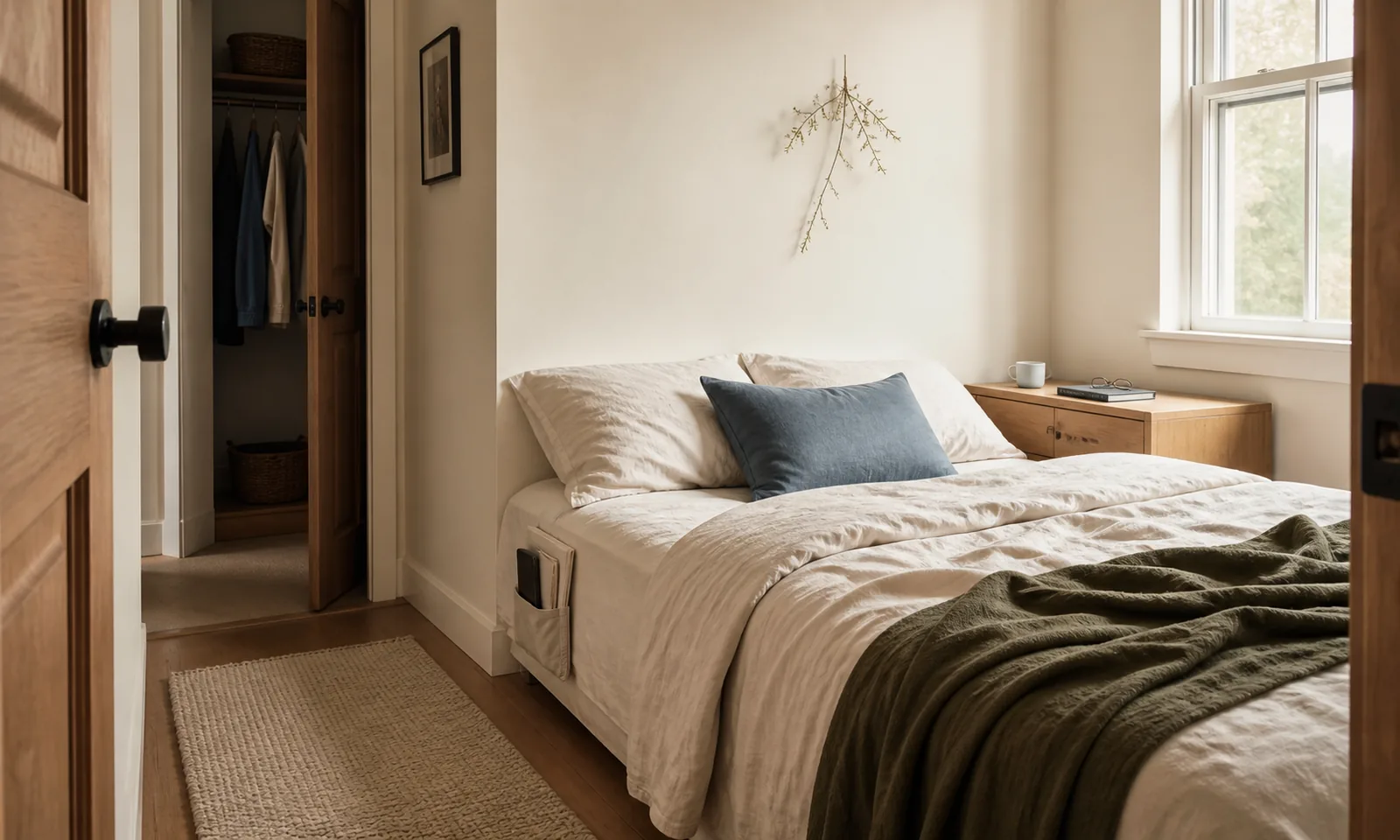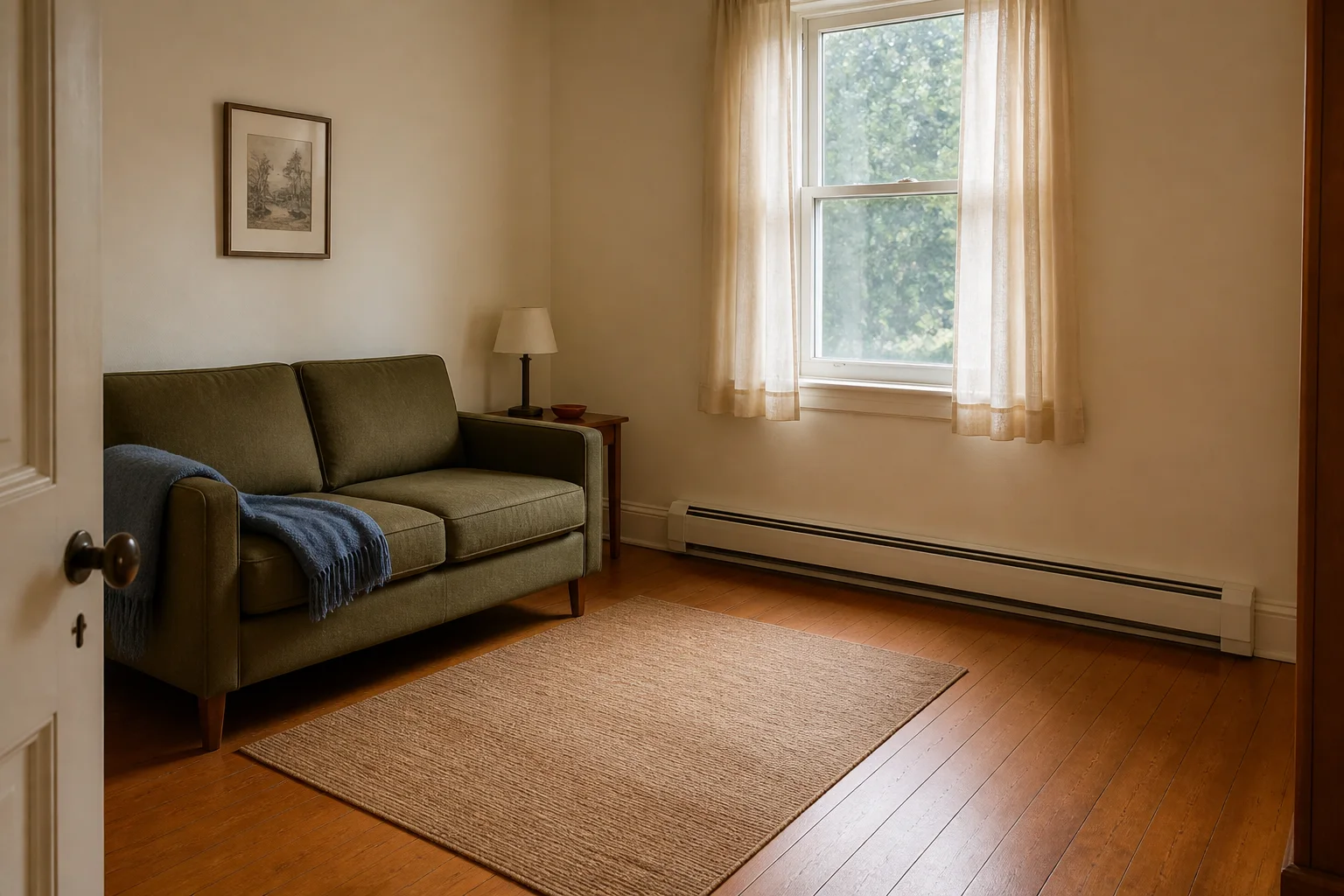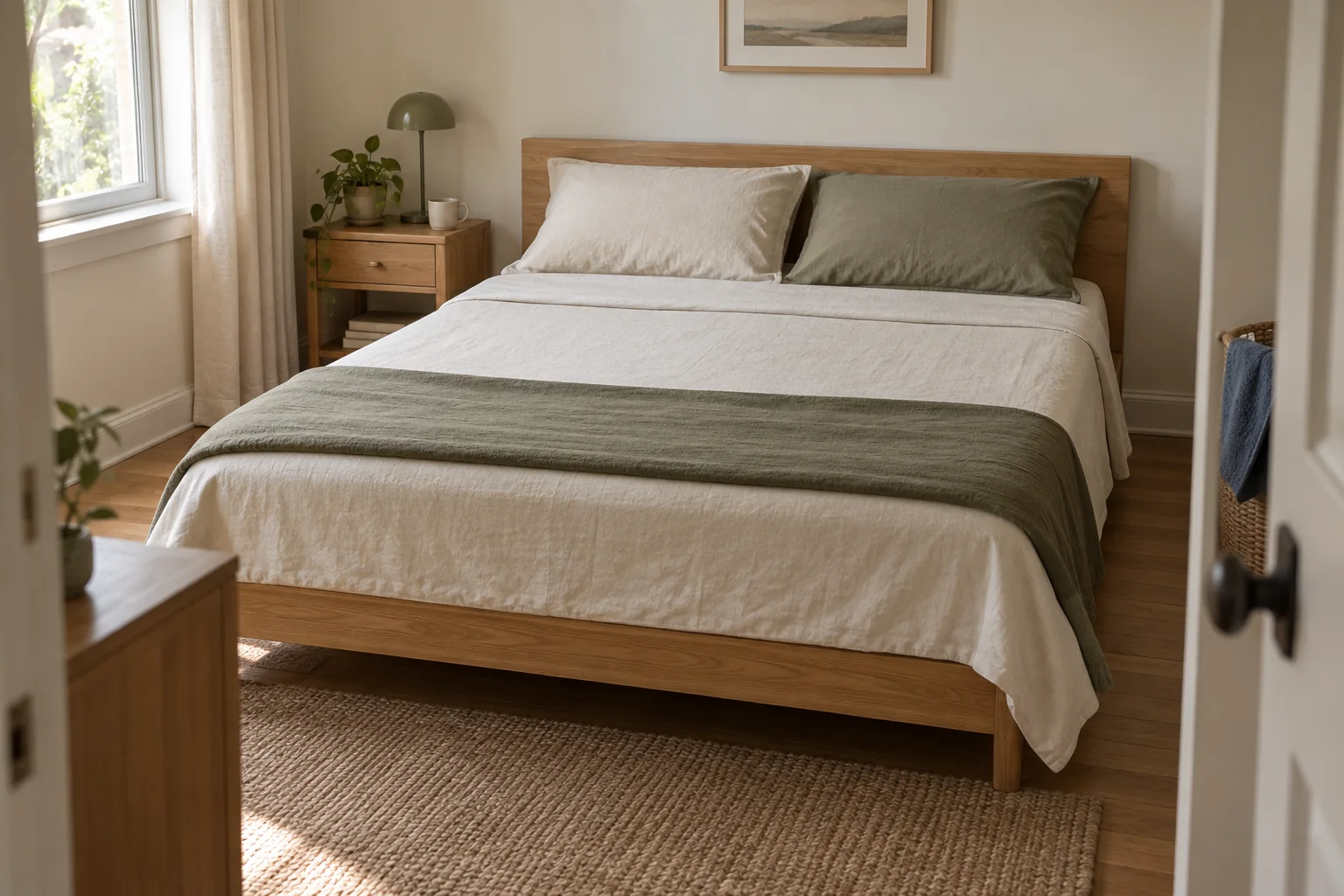
A bed can be comfortable at night and still look unfinished during the day. Most styling advice calls for a plump duvet, a folded quilt, extra pillows, and a throw. That only works if you want to sleep under those layers or have a convenient place to put them every night.
Keep the sheet, thin blanket, empty duvet cover, or separate covers that already work for you. The aim is to give the bed a clear outline, tidy any accidental-looking edges, and connect the cover to the pillows. It will look flatter than a bed with a filled duvet, but it can still look calm and complete.
Jump to a section
01
Find what makes the bed look unfinished
Stand in the doorway and look at the bed before changing anything. A flat cover is not automatically the problem. The bed may look unresolved because one edge stops halfway across the mattress. Perhaps the top sheet is bunched near the pillows, or the pillowcases seem unrelated to the bedding below them.
Pay attention to what remains on the bed through the night. That is the arrangement worth improving. Next, work out which mattress edges are visible from the room. You may need coverage on both sides, only at the foot, or just along the side facing the doorway. A bed against a wall has different visual needs from one in the center of a room. If a baseboard heater determines where the bed can sit, our guide to arranging around the furniture wall covers that room decision first.
Smooth the bedding, then step back. If the flat shape looks intentional now, leave it alone. If something still feels incomplete, identify the specific problem: coverage, the top edge, the pillows, or a color that appears only once. Fixing that one issue is more useful than adding several layers at once.
02
Make a sheet and thin blanket look deliberate
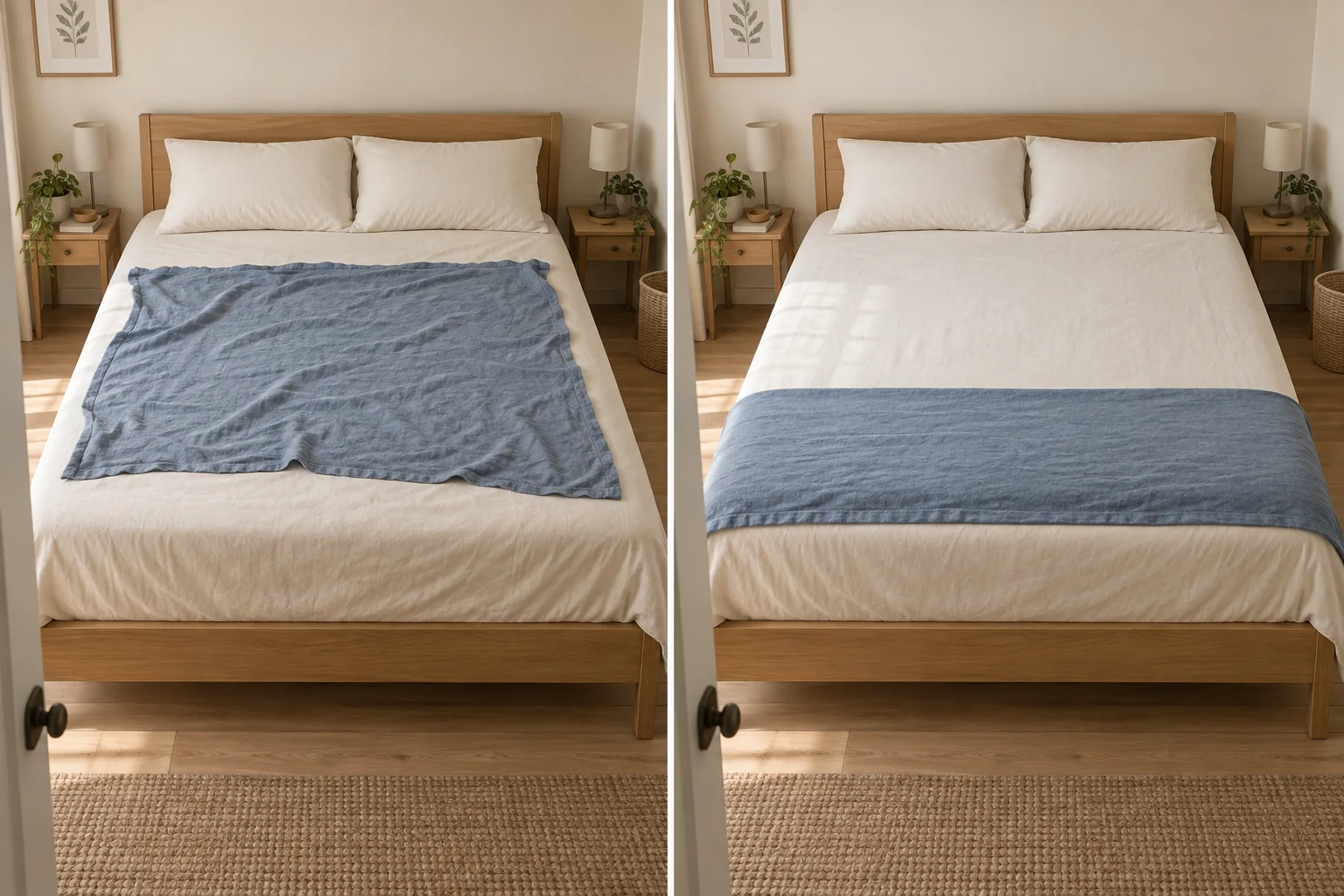
When a blanket is too small to cover the bed neatly, a top sheet can become the continuous base. Pull it up far enough to leave spare fabric at the head for a visible turn-back. Let the sides fall evenly wherever they can be seen, then arrange the blanket according to the size it actually is.
A blanket that covers the mattress and provides the side drop you want can lie in the same direction as the sheet. Set its top edge a little below the sleeping pillows and fold the sheet back over it. That one horizontal line gives the upper part of the bed some structure without another cover.
An undersized blanket tends to look awkward when it is centered as though it should cover the whole bed. Give it a smaller, obvious job. It can form a broad band across the foot or run lengthwise along the side where it is used. Keep enough of the sheet visible for it to read as the main cover, rather than something the blanket failed to conceal.
Use the sleeping pillows first at the head of the bed. Stand them against the headboard or lay them flat, whichever position stays put more reliably. The pillowcases do not have to match, though they should relate to something below. Repeat the color of the sheet or blanket, or pick up one quiet pattern that is already present.
03
Give an empty duvet cover a clean, flat arrangement
If you own a duvet cover but do not want the insert, you can use the cover as a flat top layer. A duvet cover is designed to enclose an insert, so using it empty leaves two fabric layers that may shift or twist. Keep it on the bed only if it feels comfortable and is easy for you to manage.
Line up all four corners before smoothing the two panels together from the center outward. Check where the opening sits, along with any buttons, ties, or zipper. Place the closure where it will not bother you in bed or draw attention during the day.
For a relaxed arrangement, allow the cover to fall naturally over the sides and keep its top edge straight below the pillows. A light tuck at the foot will give it a firmer outline while leaving the sides free. Avoid tucking the whole cover tightly if doing so exposes the bed rails or restricts the sleeping area. A tidy top edge and even side drops are enough, especially when the pillowcases relate to the cover.
An empty cover that bunches, twists at night, or leaves the wrong areas exposed is not earning its place on the bed. Go back to the sheet-and-blanket arrangement or use another cover that is comfortable to sleep under.
04
Arrange two different covers on one bed
Separate covers can look considered without matching exactly. A shared base and one repeated visual detail will connect them, even when the warmth, fabric, and size differ.
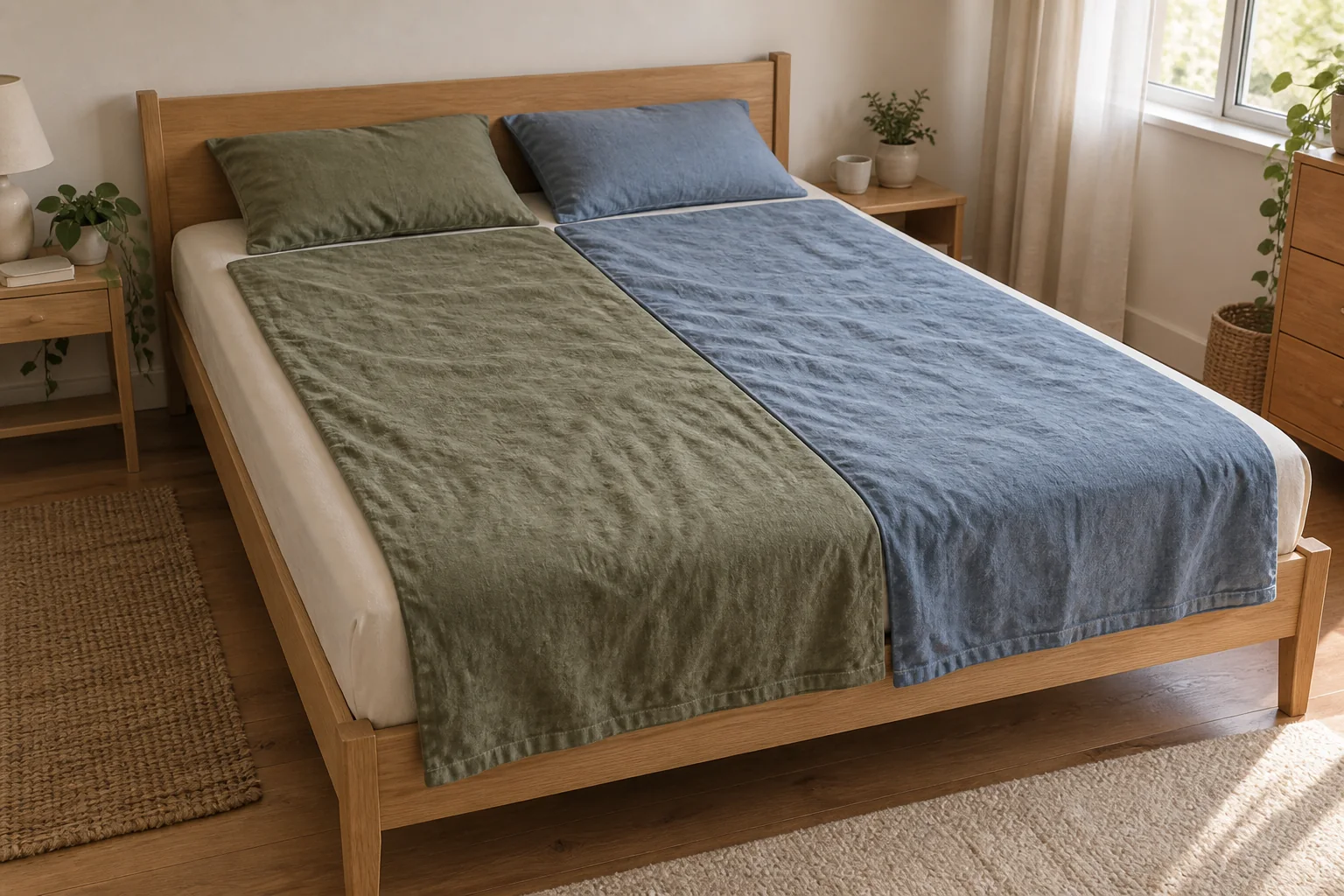
Leave the fitted sheet visible across the mattress and give each cover its own half. Run the long direction from head to foot. If necessary, fold the covers lengthwise so they occupy distinct sides instead of gathering in an overlapping pile. Line up their top edges even when the lower edges finish at different points.
When one cover is much shorter, keep both below the pillows and make the difference visible at the foot. Fold the longer one back once, or position both so the shared fitted sheet shows around them. Perfect symmetry is less important than preserving the cover each person needs.
The pillows can connect the two halves. Use one pillowcase color across the bed, or let each pillowcase repeat the cover on its side while the fitted sheet supplies a quiet color between them. This looks more deliberate than hiding both covers beneath a third layer that has to come off at bedtime.
05
Change only what the arrangement cannot fix
Try the other textiles in the room before buying anything. Swap the pillowcases, turn a blanket, or move a smaller one to the foot. A photograph from the doorway may reveal an uneven edge or isolated color that was harder to see while standing beside the bed. If the bed still seems to float against the wall, our guide to testing a black accent wall in a small bedroom can help you decide whether the background is the real problem.
If the problem remains, name it before you shop. Perhaps the cover is too narrow for the visible sides or too short for the fold you want. It may simply be awkward to use at night. In a two-cover arrangement, the only missing connection might be the pillowcases.
Compare the listed dimensions of a possible cover with your mattress and the arrangement you want. Products sold for the same mattress size can have different measurements, so the size label is not enough. Measure across the mattress top and down the visible sides to estimate the width you need. To estimate length, include the area from the pillows to the foot, the drop at the end, and any extra fabric needed for a fold or tuck.
Material names and product photographs do not establish how cool a cover will feel in your room. If temperature is why you avoid a duvet or comforter, keep that concern separate from the styling decision. Check the construction, care instructions, and return terms that matter to you before choosing a specific cover.
Only buy something when it solves the problem you identified. Otherwise, it is likely to become another piece of decorative bedding to store or move.
06
Live with the arrangement for one night
The version that looks best in a photograph may be annoying to use. At bedtime, see whether the fold opens easily and whether separate covers stay on their own sides. Notice if an empty duvet cover twists around your feet. Make the bed as usual the next morning, then keep the arrangement that restores a clear outline with the least handling.
If the bedding works but the area around it still feels crowded, the problem may be beside the mattress. A separate guide explains what to use when there is no room for a nightstand.