A backpack can end up beside a perfectly good cupboard because there's no room inside or the bag catches on the opening. Sometimes the cupboard is simply too far from where the bag gets opened. Before adding another organizer, work out why the storage you have isn't being used.
Start with a usable location, then check it with the backpack filled as it normally is. An existing shelf, a section of an entry closet, or an open basket beyond the doorway may be enough, provided you can lift the bag out without moving everything around it.
Jump to a section
01
Choose the location before the organizer
Look at where the bags currently land and where they get opened. Those may be different places. Storage near the entrance is convenient for leaving the house, but it can be awkward if the bag is carried elsewhere to take things out and then has to be brought back.
In an entryway storage discussion, a proposed downstairs cabinet was separated from the upstairs rooms where bags were opened. Other households found entry storage useful. Neither location suits every home.
Compare an accessible section of the entry closet with storage just beyond the entrance or near where bags are opened. In a narrow entryway without room for furniture, moving storage out of the arrival space may be the most useful change. Keep bags off working surfaces such as the kitchen counter.
02
Check the space a loaded backpack really needs
An empty backpack folds into spaces that a filled one won't. Test the largest bag you need to store with its usual contents and filled outer pockets. Let the straps fall as they do when you put it down.
Measure its width, height and depth in the position you intend to use, then compare them with the storage's usable opening and interior. A cabinet's advertised width includes its sides; a basket may narrow toward the base.
Try taking the bag out by its handle. If you have to turn it sideways, pull another bag out first, or tuck every loose strap inside, the opening is awkward for daily use. A shelf above the bag also needs to leave room for the lifting motion.
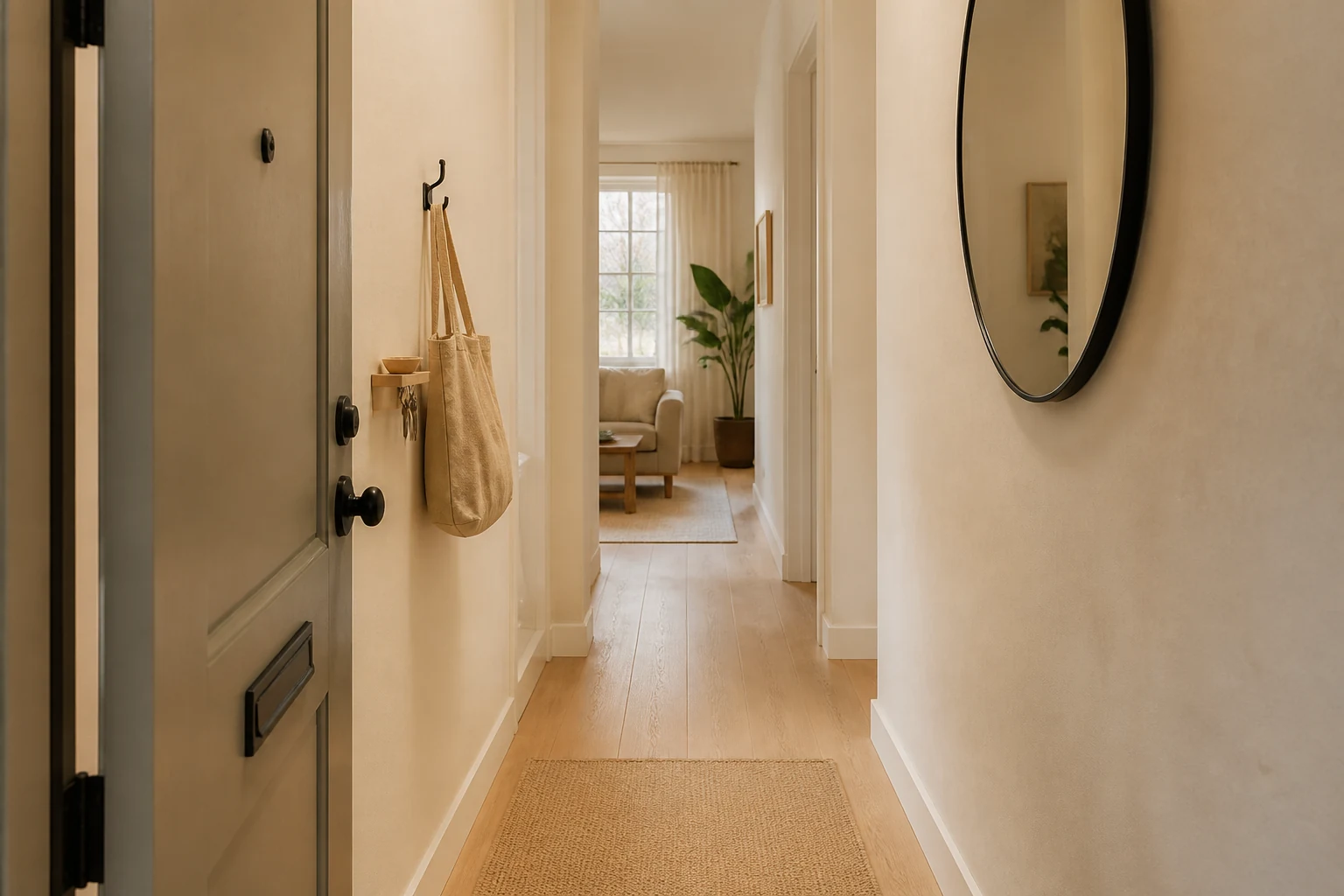
For hanging storage, check how far the bag sticks out from the wall with its pockets full. The person using it should be able to lift it onto and off the hook comfortably, with the bag and straps clear of the walking route. A neat row of closely spaced hooks may leave too little room once every bag is hanging.
Weigh the loaded bag before choosing a mount. Use the instructions for the exact hook, rail and wall fixing. For adhesive hooks, Command's guidance requires checking the product's weight limit and approved surfaces; adding extra strips does not automatically increase capacity. If the mount doesn't suit the load or surface, choose another storage format.
03
Compare hanging storage with an open shelf or basket
Open storage keeps the bag visible and accessible. A cupboard conceals it but needs room for the door to open.
| Storage format | When it's useful | What to check |
|---|---|---|
| Wall hook or short rail | A suitable wall can hold the mount and the filled bags stay clear of the route | Loaded weight, mounting instructions, hook spacing and bag projection |
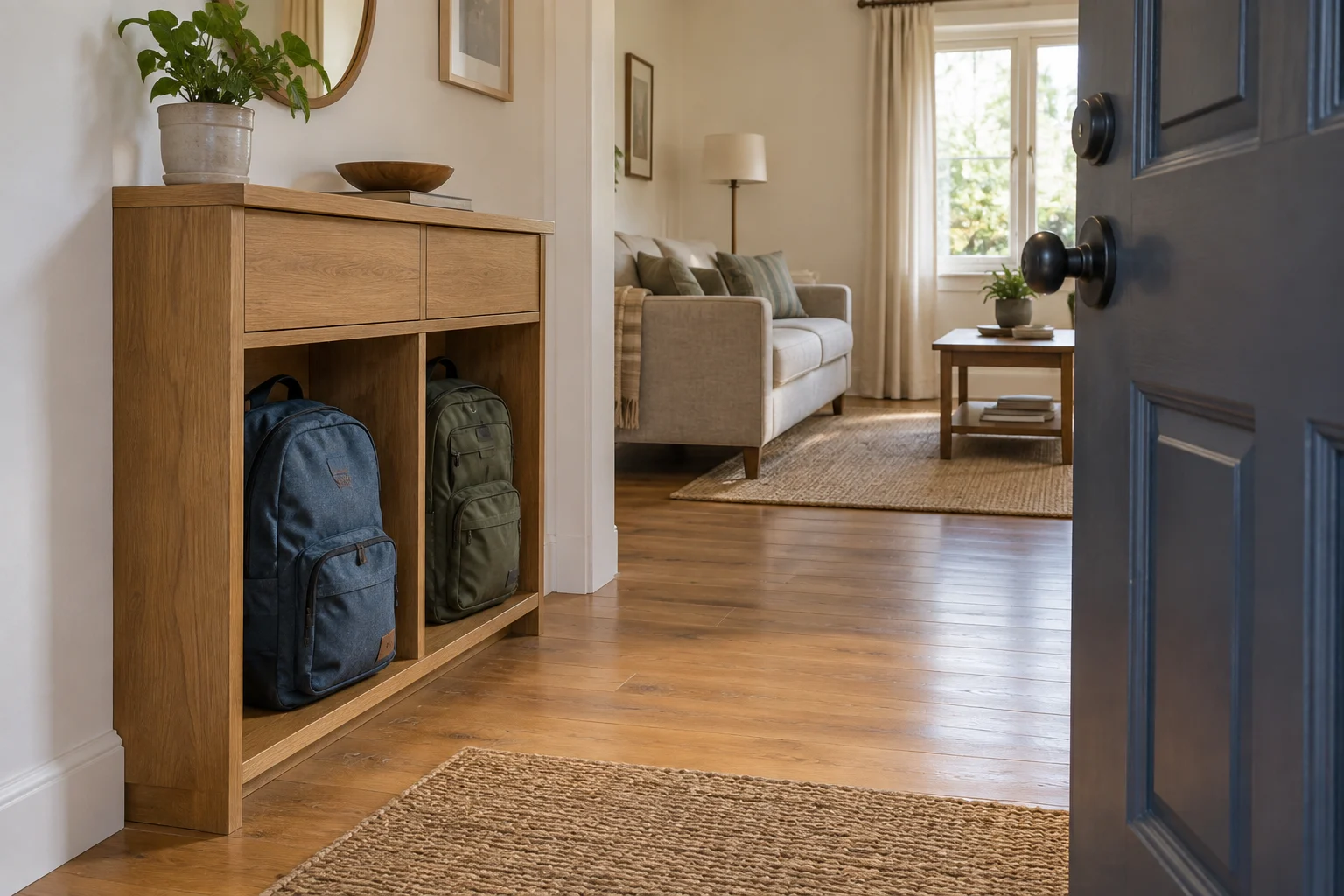
| Open shelf or bench bay | The bag can rest upright and slide or lift out easily | Internal depth, shelf capacity and space above the handle |
| Open basket | An existing nook can contain the bag without blocking access | Base width, rim height and whether straps catch during removal |
| Existing cupboard | You want the bags concealed and have an accessible section | Door swing, usable opening and whether each bag can come out independently |
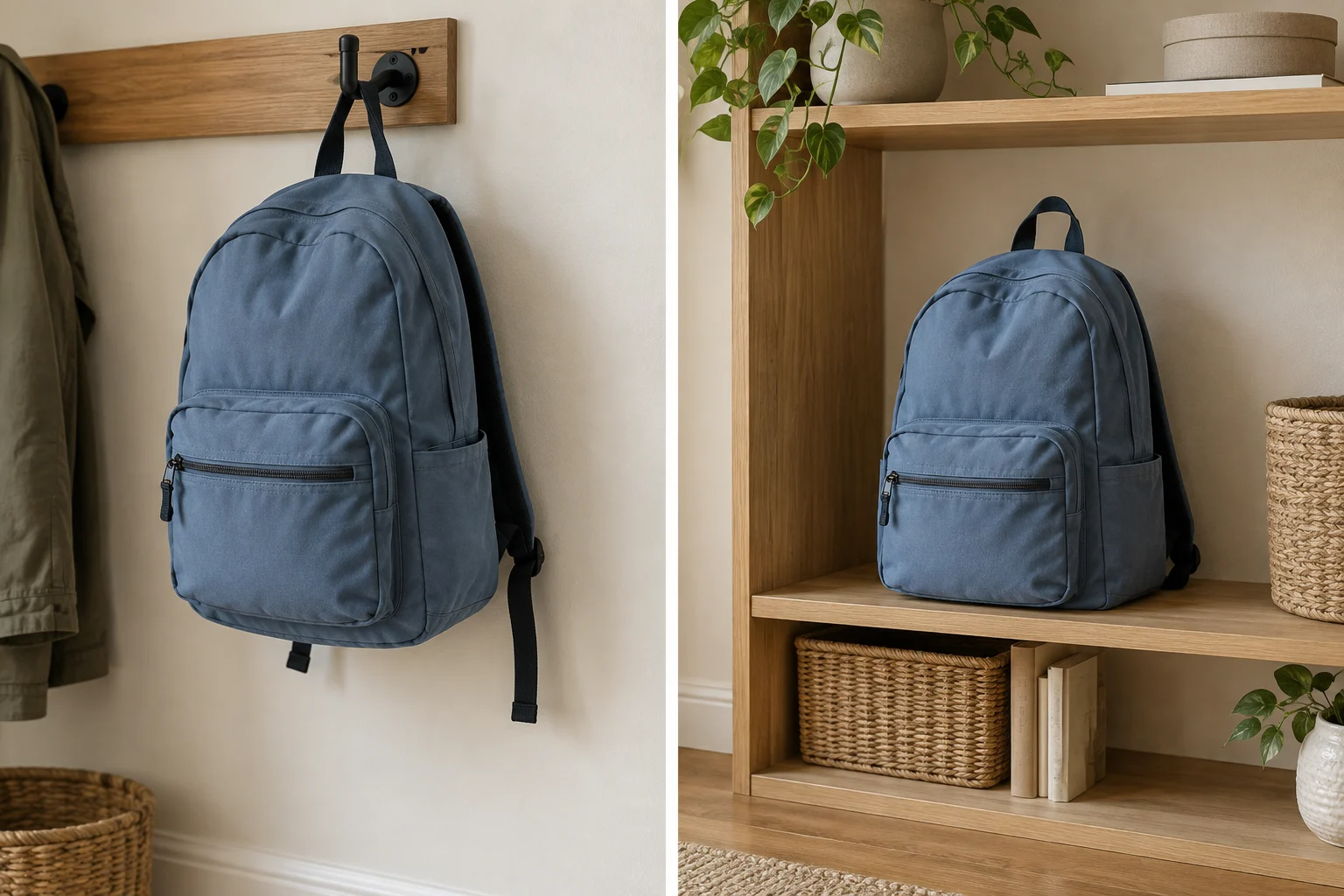
A shelf supports the bag from below and avoids lifting it onto a hook. Check its weight rating and depth; the filled bag should not spill across the edge.
With several bags in one basket, you may have to reach past the nearest one. Separate spaces help each bag come out independently, provided the dividers leave enough room.
A lidded box or storage ottoman needs a clear top whenever you open it. It may suit bags you reach for less often, while an open bay avoids that extra step for daily bags.
04
Fit the storage into the room you already have
A small entrance with a usable closet
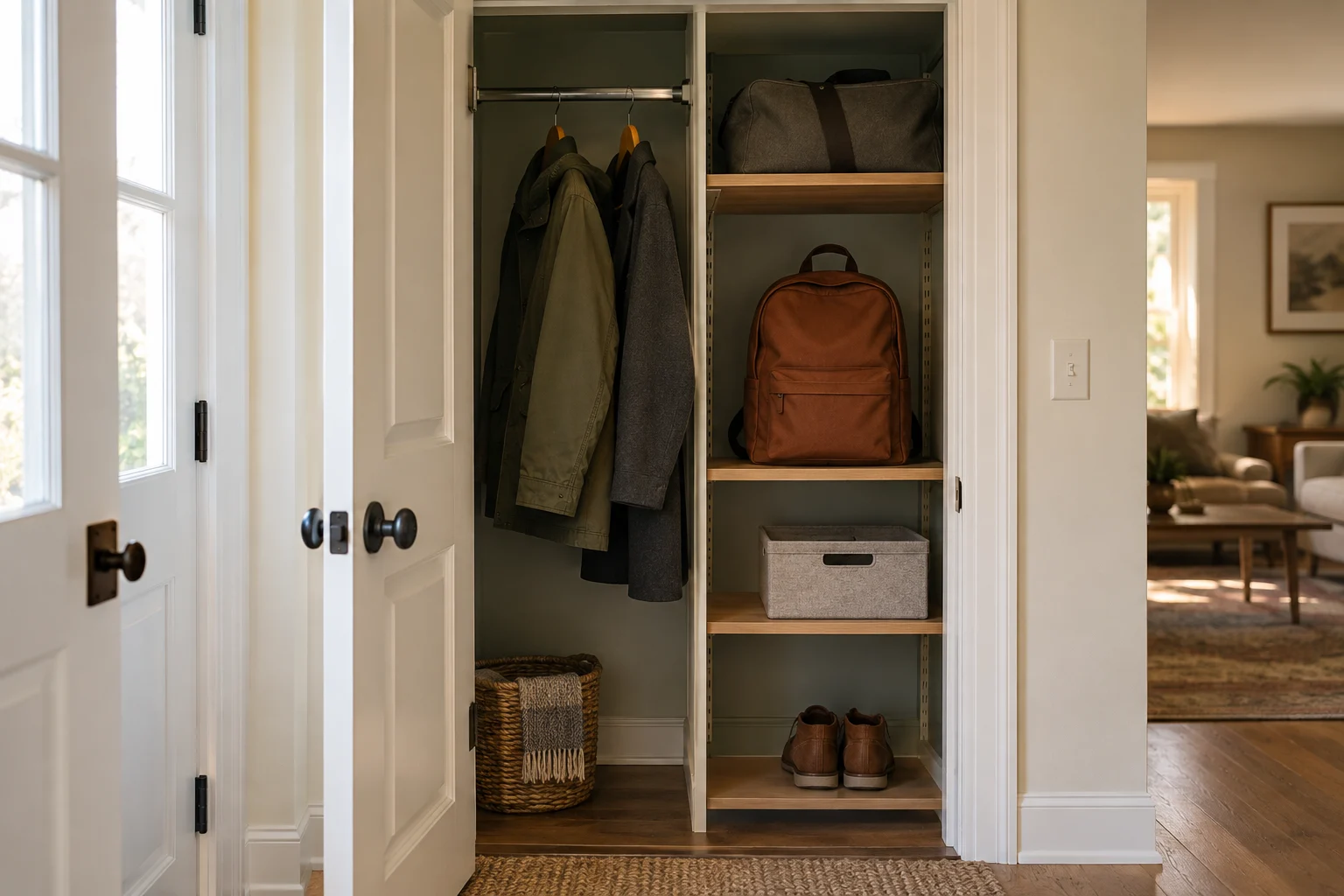
Make one accessible section of the closet available for bags. Move spare belongings from that section before adding fittings. Test the bag with coats hanging in their normal positions, since their bulk can reduce the opening.
An adjustable shelf may let you keep the existing cupboard and make a taller bay. Check the furniture's instructions before changing its configuration, and keep within its shelf ratings. Avoid adding hooks to a door until you have confirmed that the door and fitting are suitable for the load.
A front door that opens into the living room
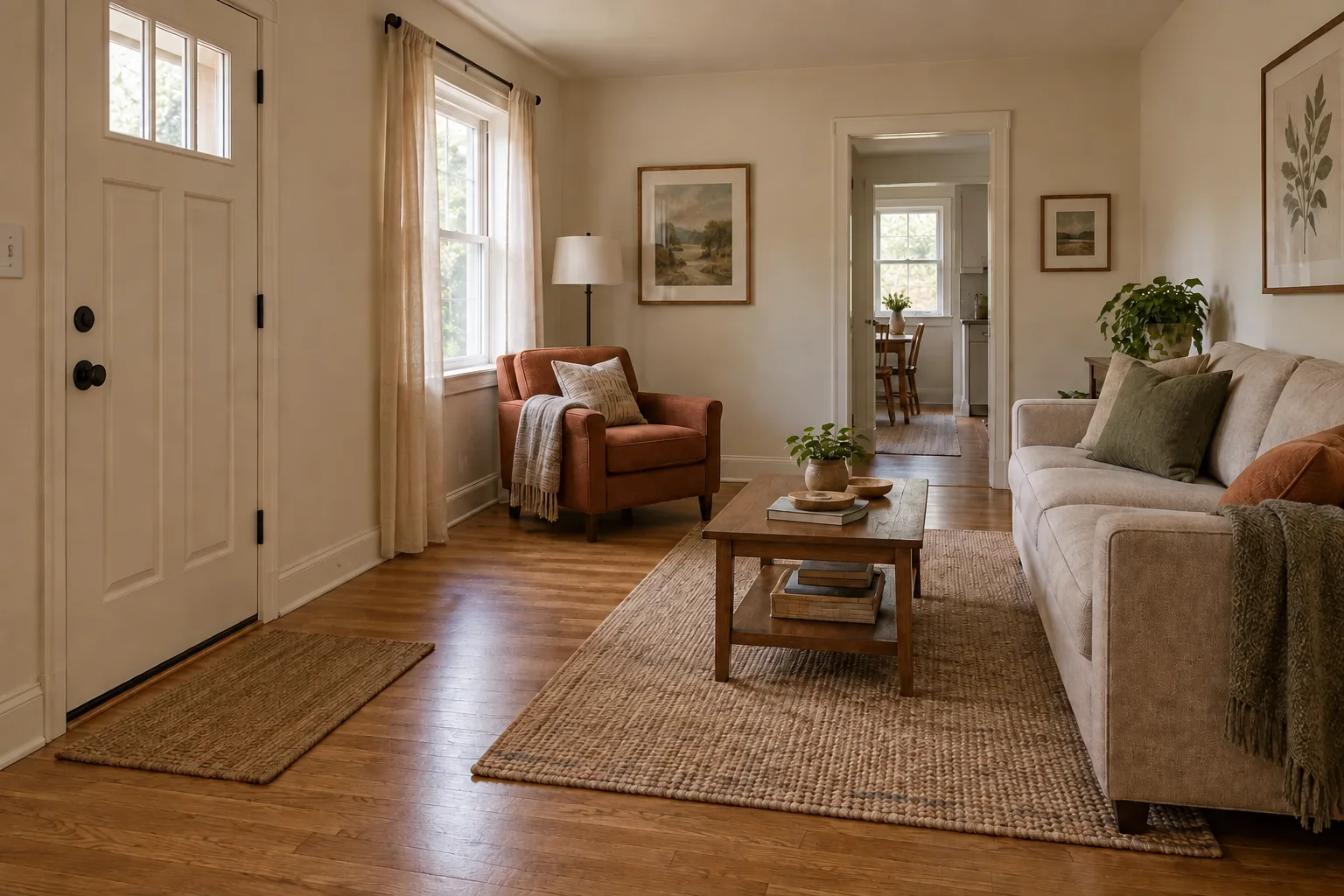
Use a cabinet or shelf beyond the place where you stand to close the door. In a room with no separate entryway, the bag storage can belong to existing living-room furniture rather than a new hall tree beside the entrance.
Set aside a section of the furniture for bags. A basket inside an open bay can conceal straps; a cabinet door hides more visual clutter. If you need something new, choose a wood tone or basket material already used in the room.
If you use a bookcase or cabinet, include anchoring in the plan. The U.S. Consumer Product Safety Commission advises securing furniture such as bookcases and dressers to the wall. Follow the furniture and anchor instructions for the piece and wall involved.
No useful storage near the door
An open bay or cupboard in the nearest room with spare capacity can hold the bag beside the surface where it's opened. Try the end section of an existing sideboard, or a basket beside it if that leaves room to use the furniture and cross the room. If neither works, try another location rather than a smaller organizer that won't hold the bag.
05
Keep daily bags separate from storage overflow
Reserve accessible storage for the bags you need regularly. Spare backpacks and occasional equipment can use less convenient shelves or another cupboard. Otherwise, the daily bag ends up pushed behind things that rarely leave the house.
Wet outerwear, shoes and bulky sports gear may need their own places. They don't all have to share the backpack bay. Decide what that bay can hold comfortably, then keep its contents within that capacity.
06
Test the arrangement before buying more storage
Try the proposed location with existing furniture where possible. Don't improvise a wall mount or test an unknown fixing with a heavy bag; use a suitable supported surface while you assess the location.
Put all the daily bags in place, then remove and return each one. Open nearby doors and use the furniture around them. This checks the whole arrangement, including loose straps and access to neighboring bags.
If the test fails, work out what needs to change before buying anything. Try a different bay or format if the opening is too narrow, and move the storage if it blocks the entrance. If lifting the bag over a basket rim is awkward, a lower rim or an open shelf may help.