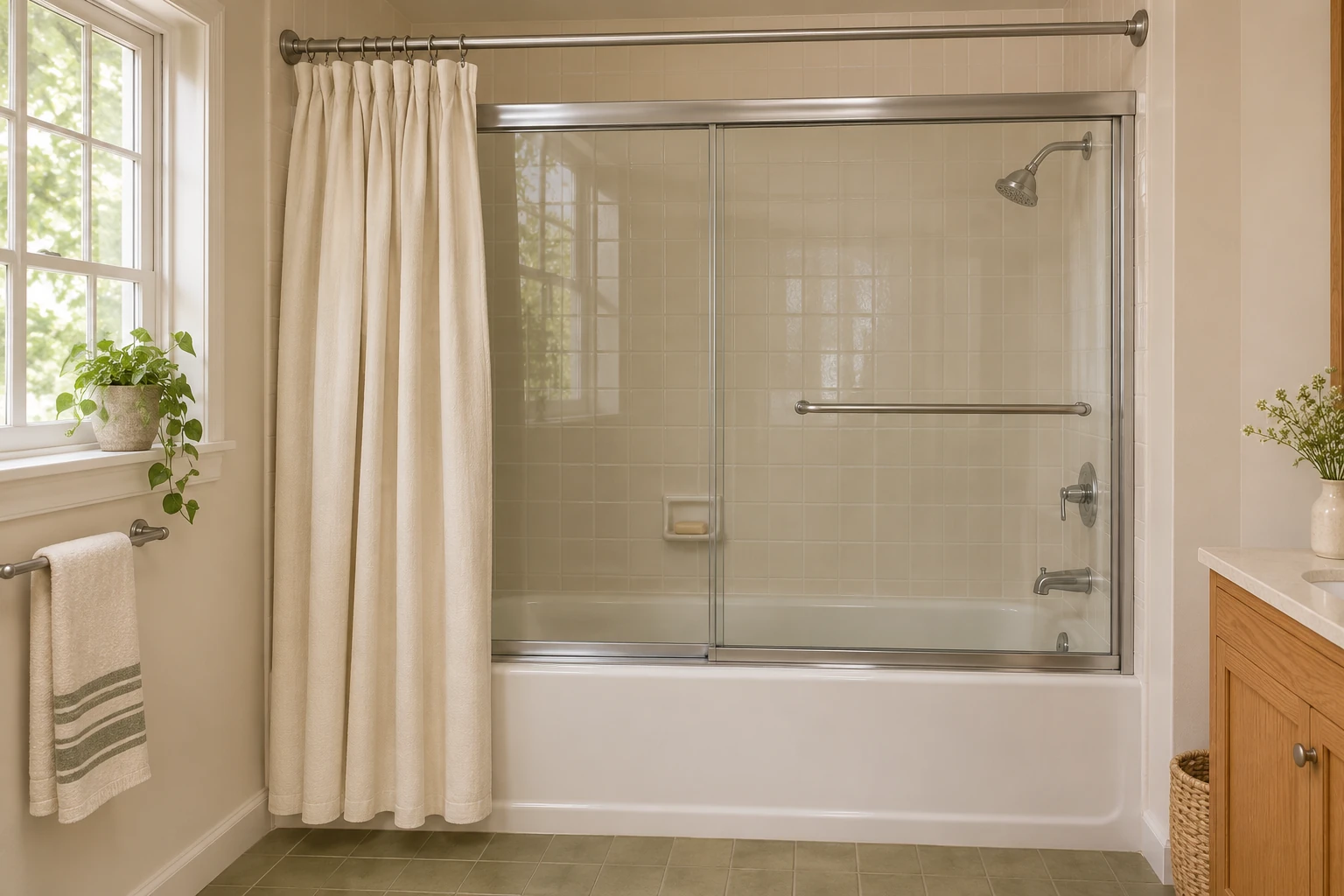
Check what happens with the glass open. A curtain that looks right across a closed enclosure may bunch beside the handle, narrow the entrance or meet an outward-opening door halfway through its swing. It also needs to move aside for glass cleaning.
Before adding the curtain, work through those movements with the enclosure you have. Sliding and hinged doors need different checks.
In this guide
01
Decide what you want the curtain to change
Hiding the enclosure and making clear glass more private are different jobs. If you dislike a metal frame or want a broad area of fabric, a curtain can change the view of the whole shower. If you like the enclosure but want to obscure the person behind it, you may have another suitable option that leaves the entrance free of fabric. For either fabric or film, check the actual screening it provides under your bathroom lighting; a decorative pattern alone does not establish the privacy you want.
In Apartment Therapy's account of a Manhattan rental, the resident covered an existing sliding glass door with a colored shower curtain because she could not remove the enclosure. It shows how fabric can change the room, though the arrangement still needs checking against your own door.
Think about how you will leave the curtain between showers. Keeping it drawn hides more glass but also puts more fabric across the room's view. Gathering it at one side reveals the enclosure again. If you only like it closed, be sure you are happy to move it every time someone enters or cleans the shower.
For color, work with the finishes you are keeping. The same approach used to warm up a cold gray rental bathroom applies: judge a fabric sample beside the tile and vanity under your bathroom light before choosing the whole curtain.
Treat this as an addition to a functioning enclosure. A decorative cover is not a repair for leaking seals or damaged glass.
02
With sliding doors, keep the opening and handle clear
A sliding door does not swing out toward the curtain, but the fabric can still occupy the space where you need to step through. Start with the side you actually use to enter, including which handle you reach and where you stand while opening the glass.
Imagine a tub enclosure that you enter at the right-hand end. Gathering the curtain toward the left might leave that entrance available. Gather it toward the right instead, and the whole bundle may sit beside the handle and in front of the opening. It looks the same when closed, but one parking position may make the shower much easier to use.
Check the return trip from inside the enclosure: can you open the glass, move the curtain aside and step out without holding a bundle of fabric out of your way? Can the next person reach the same handle from the bathroom? A curtain wide enough to span the enclosure still needs to pass those checks.
Include the gathered folds when you assess the fit. An empty rod leaves space that a curtain on rings will occupy. A tieback may keep those folds together, but it still needs a position that leaves the opening and handle usable.
If your sliding enclosure allows entry from either end, consider both routes before assigning one end to curtain storage. The end closest to the taps, towel or clear standing space may be the one the household prefers to use.
03
With hinged doors, follow the full opening movement
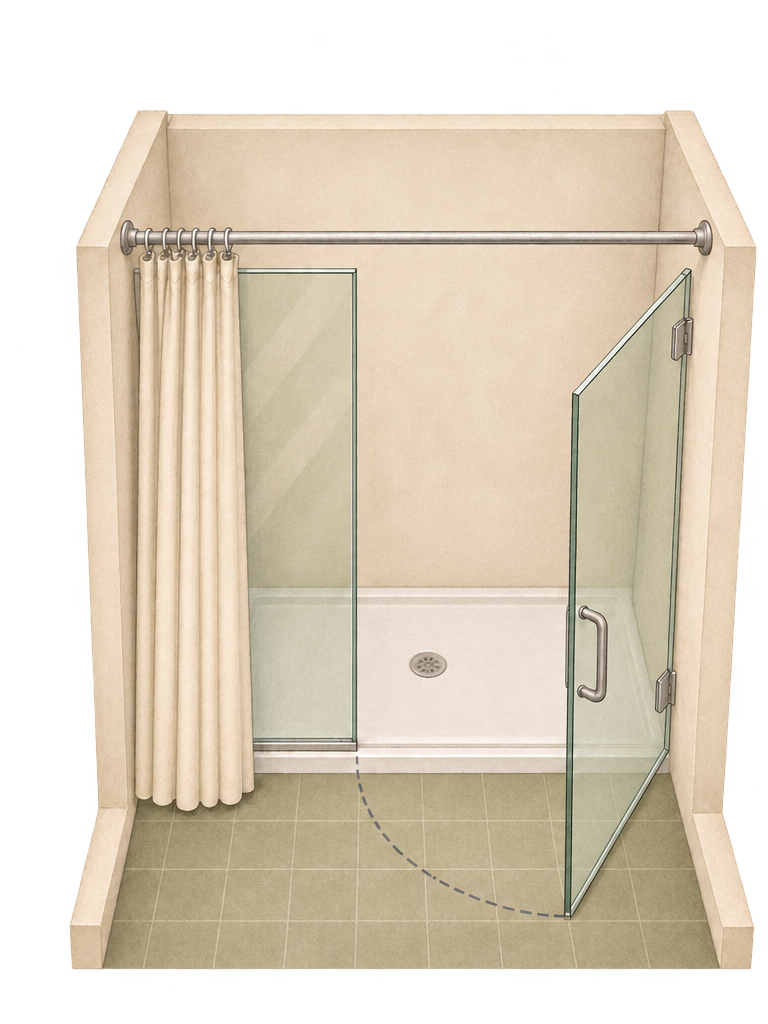
For a door that opens into the bathroom, check the entire swing as well as the entrance. Both the proposed support and the fabric need to stay clear of that movement. A clear gap beside the closed door does not tell you what happens once it opens.
Picture a hinged door beside a fixed glass panel. There may be room to gather the curtain in front of the fixed panel, away from the moving door. Check that position against the full swing. Move the same gathered fabric to the hinge corner and it may sit where the opening door needs to pass. Neither position can be judged from a front view with the door shut.
Check where you stand, too. Moving the curtain farther into the bathroom might avoid the glass but put the fabric beside the toilet, against the vanity or across the place where you step out. The solution needs room for the person using it as well as the door.
Use your door's actual permitted movement and manufacturer instructions. Do not change hinges or stops to accommodate a decorative curtain. Doors that open differently need their own check; an inward-opening option does not, by itself, settle whether the whole arrangement works.
Once you find a possible curtain position, check whether you can install a suitable support there. Moen's rod identification and installation guide provides separate instructions for different rod models. Follow the exact rod's requirements for span, mounting and support surfaces, rather than assuming a tension rod will work wherever you want fabric. Do not improvise attachments to the shower glass or frame.
Sliding doors
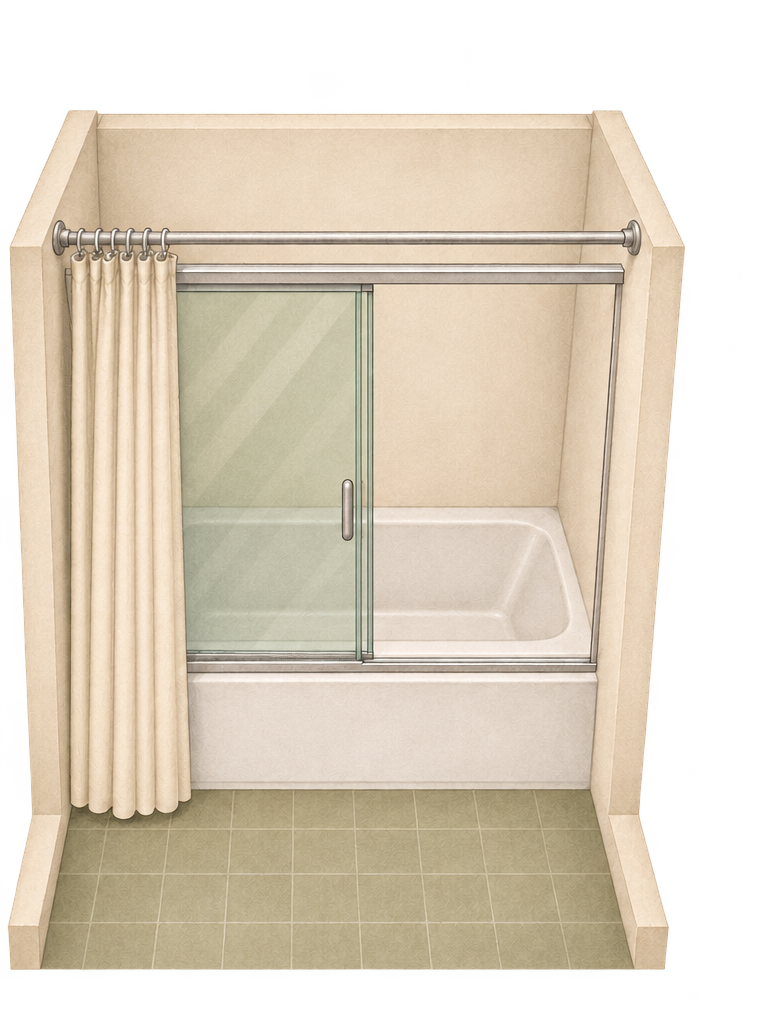
Outward-opening hinged door
04
Leave the glass accessible for cleaning
Plan a cleaning position for the curtain as deliberately as its everyday position. You need access to the glass and hardware even when they are normally hidden.
Sterling's bath and shower door care guidance recommends using a squeegee after showering to help prevent water spots. Follow the care instructions for your own enclosure and its finish. Notice whether moving the curtain makes that care awkward enough that you would put it off.
With a sliding enclosure, gathering the fabric at one end may reveal the entrance but conceal the panel you want to clean. Check whether you can move it to the other end and reach the remaining surfaces. With a hinged door, check that the cleaning position still allows the door to open as required.
Give wet fabric somewhere suitable to dry according to its care instructions. Do not make a permanently bunched, damp curtain the price of keeping the entrance clear. If that parking position also covers the only useful towel rail, reconsider it before displacing the wet towels that need space to dry.
You will have fabric to wash as well as glass to maintain. That may be worth it for the appearance you want, especially when the curtain moves aside easily. Having to take the whole arrangement down for cleaning is a larger commitment.
05
Add the layer only if it solves the right problem
Choose the curtain when you want fabric in the room and the enclosure remains comfortable to use. Check the arrangement in each position:
| Check | What a workable arrangement provides |
|---|---|
| Curtain closed | The concealment or visual privacy you actually want |
| Curtain gathered | A definite parking position clear of the handle and entrance |
| Glass opening | Its normal permitted movement without meeting the curtain or support |
| Person entering or leaving | Usable standing and stepping space |
| Glass being cleaned | Access to the relevant panels and hardware |
If visual privacy is your only aim, investigate a compatible privacy film before adding fabric. Compatibility needs checking: Artscape's FAQ, for example, allows bathroom use but requires a clean, smooth, flat surface and excludes textured glass. That is a manufacturer-specific limit, not approval for every film on every enclosure. Confirm suitability for your glass, any coating and the proposed exposure with the relevant manufacturers.
Film would leave the frame visible and would not give you fabric folds or softness. A curtain may therefore remain the better match for the decorating goal even when another treatment could obscure the view. Equally, keeping the glass bare is reasonable if the added layer leaves you negotiating fabric every morning.