You like the bed's wood finish. The nightstands are a different brown, and you chose the dresser because its drawers worked. Now you need another piece, and choosing its finish feels harder than choosing the furniture itself.
It can repeat the bed, connect with the bedside furniture, or bring in a contrast you prefer. You can keep useful pieces even when their woods differ. Decide which finish you'd like to see more of, or whether you'd enjoy another color alongside them.
In this guide
01
Start with the furniture and surfaces that will stay
Take a look from the bedroom doorway, then from the bed. Note the wood you see together: the headboard, nightstands, dresser, wardrobe and exposed floor. Include a wooden mirror frame if it occupies a noticeable part of the wall.
Separate what’s staying from what you’re choosing. If you’re keeping a dresser because it holds your clothes well, treat it as part of the starting point. You don’t need to plan its replacement simply because a new bed has a different finish.
Notice which pieces attract your attention. A wide headboard may be more prominent than a small bedside table; a tall wardrobe may matter more than either. Begin there, while keeping the other finishes in view. The largest surface doesn't have to dictate every choice.
Describe the finishes in plain words: pale brown with a yellow cast, deep reddish brown, or muted gray-brown, for example. Use those descriptions when you compare new pieces.
02
Compare the finishes you can see, not just their names
A label such as walnut, oak or espresso doesn’t tell you whether you like a finish beside your furniture. Look at the actual sample when one is available. Compare its color, how light or dark it appears, its grain and its sheen.
"Undertone" describes the color you notice within the brown: perhaps yellow, red or gray. You don't need a perfect classification. Look for the difference between two brown finishes when you put them side by side.
Room & Board’s guide to mixing wood tones recommends shared undertones and repeated wood finishes as ways to connect pieces. Treat these as choices to try. A shared color can be a useful connection, but it isn’t the only thing that can make you like two pieces together.
Set the candidate sample beside the furniture it will sit nearest. Then step back and look at the rest of the room. Check it in daylight and with the lamps you normally use in the evening: X-Rite’s guidance on evaluating color explains that colors can match under one light source and differ under another. If you’re shopping online, use several views of the piece and ask about a finish sample before committing to a close match. A product photograph is a useful starting point for the comparison, not a substitute for seeing the finish in your room.
03
Compare three finishes in the same bedroom
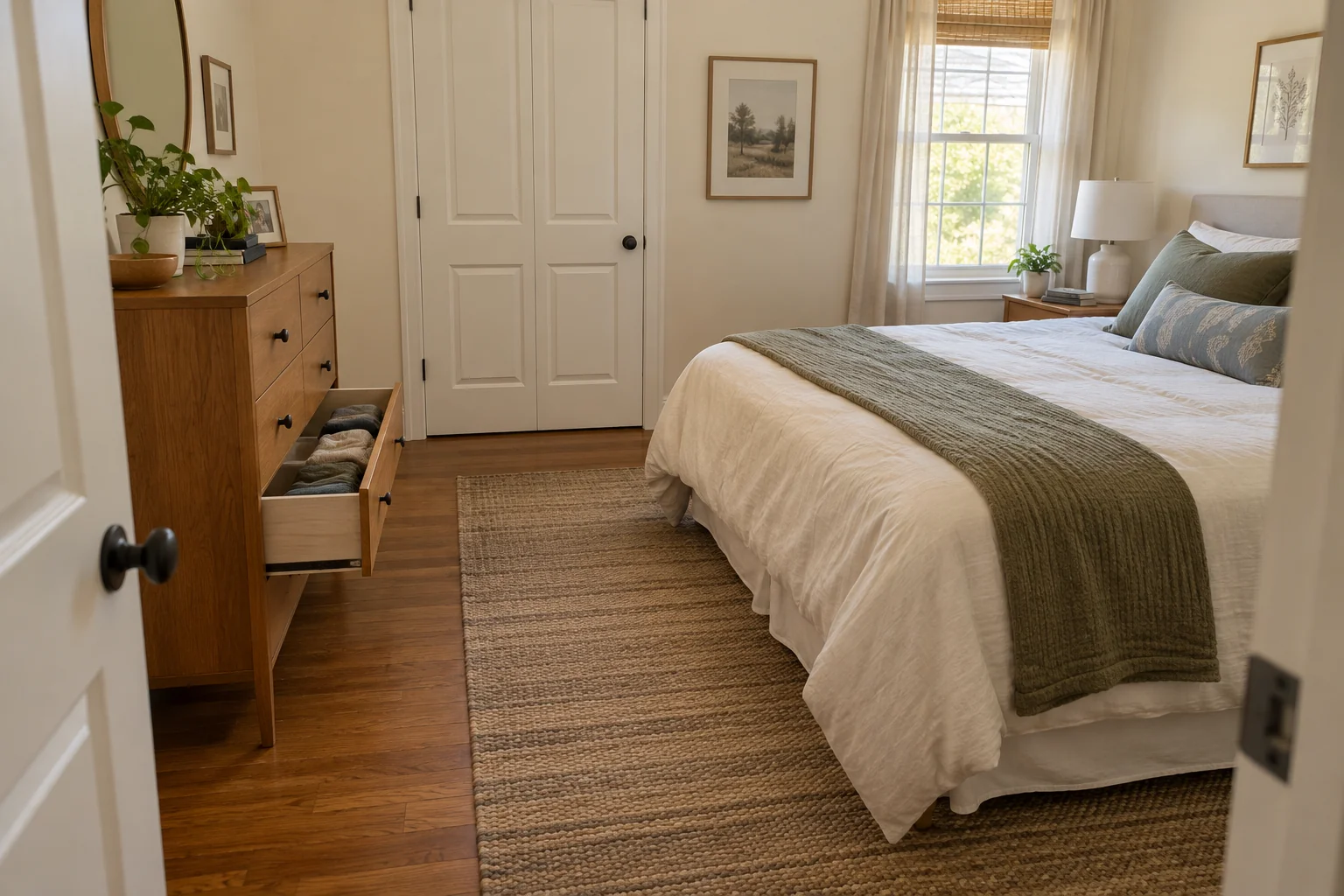
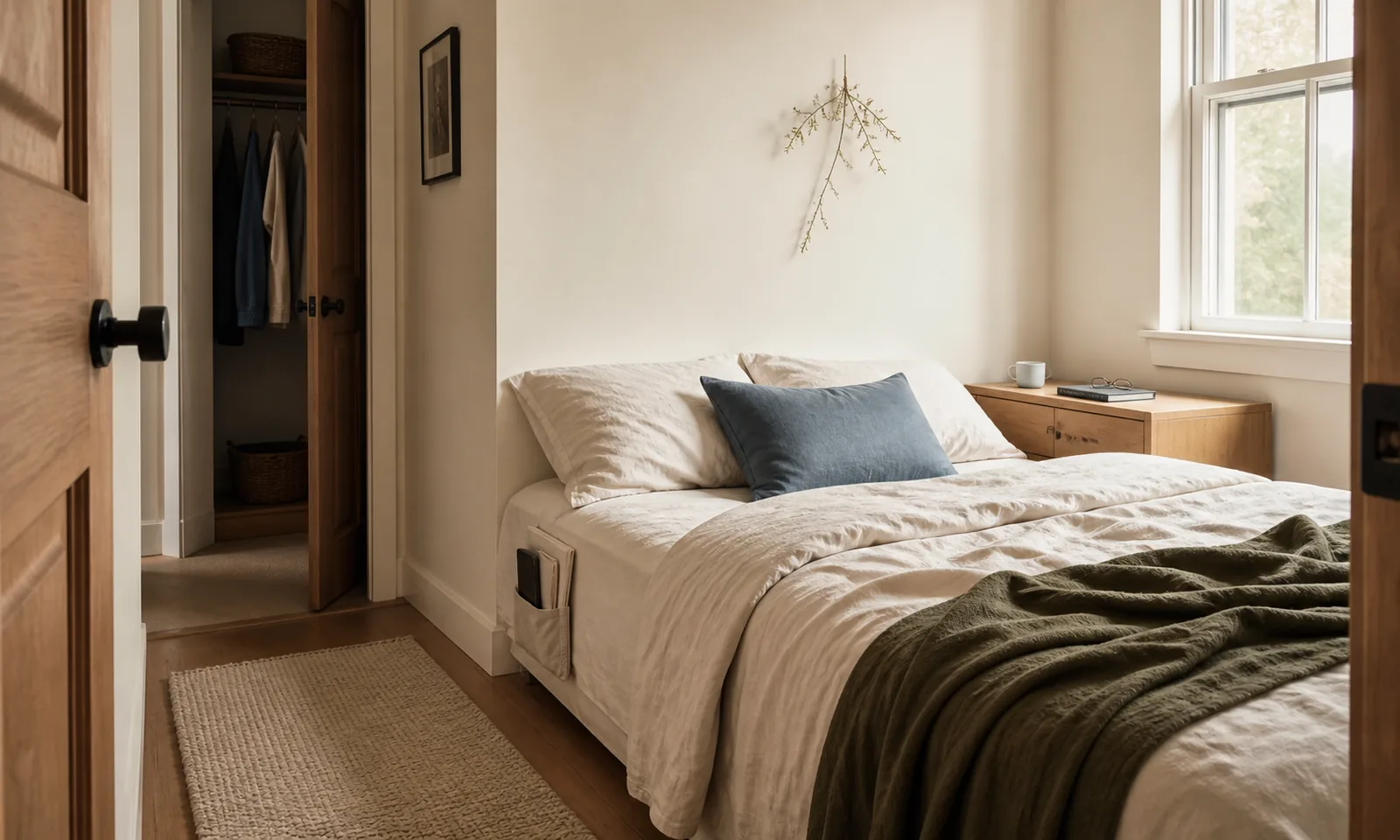
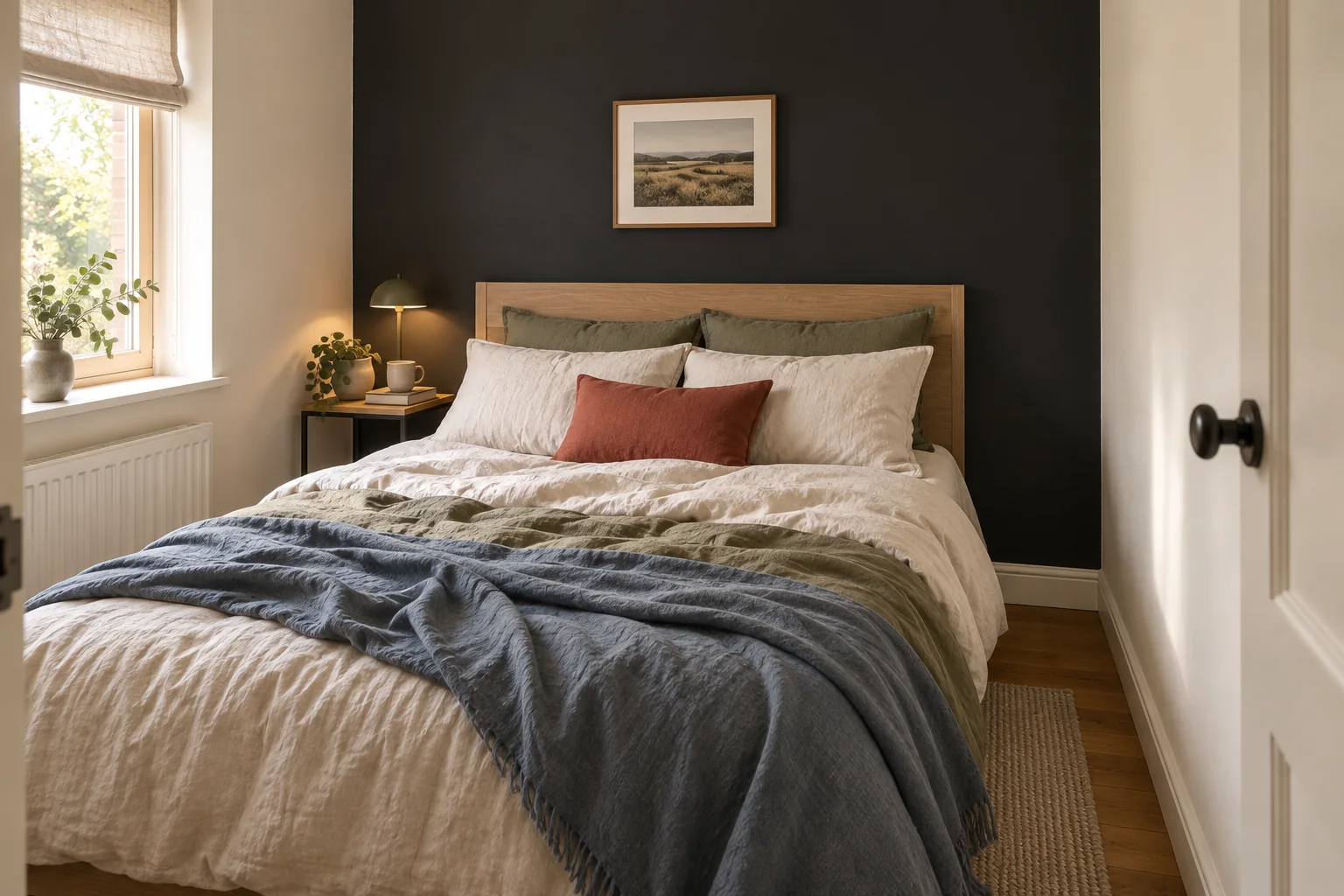
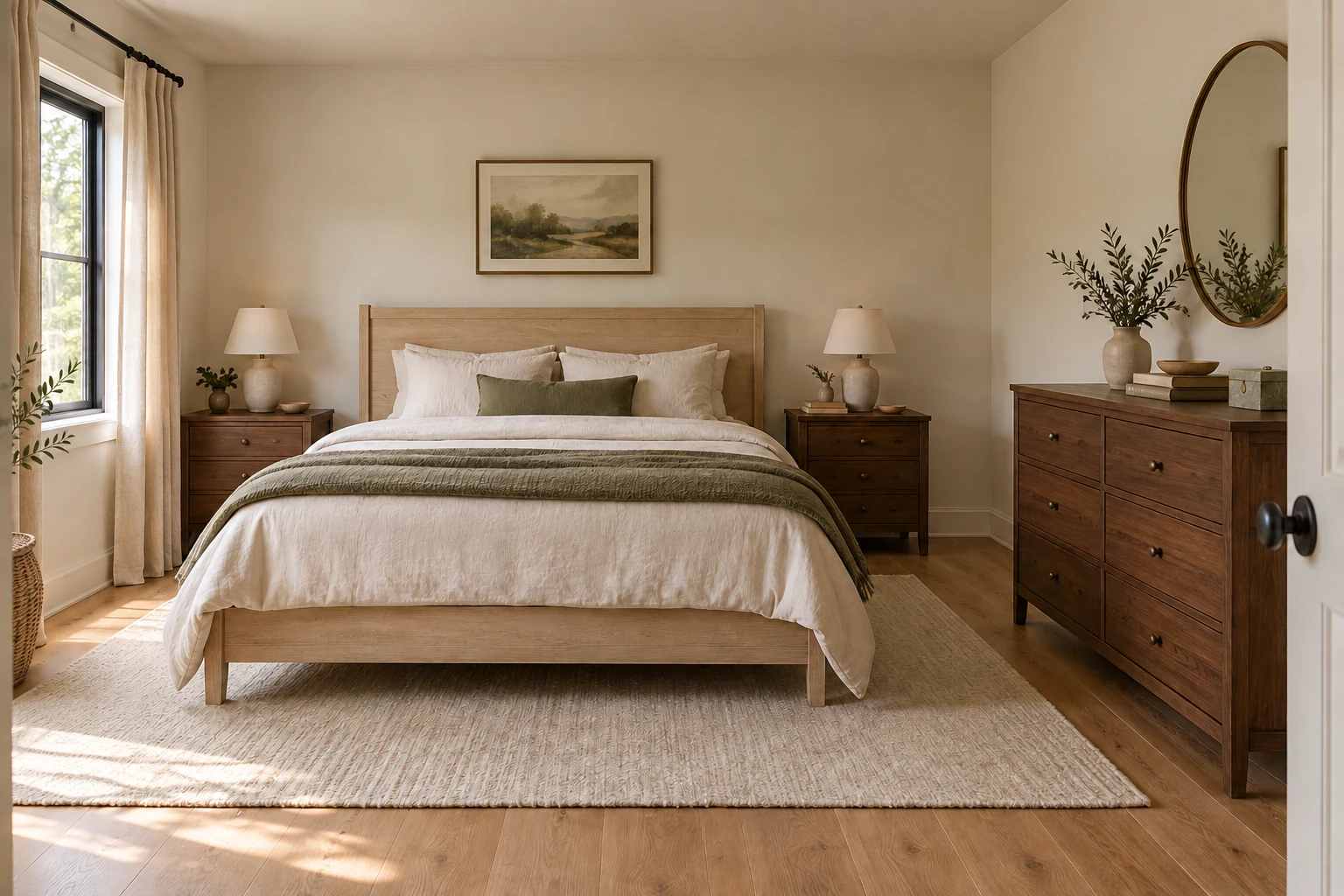
Imagine a bedroom with a pale brown wooden bed, two deeper brown nightstands, a light floor and plain ivory bedding. The bed and nightstands are staying. The room needs a dresser.
In the illustrative views below, the dresser keeps the same shape, size and position, with the textiles and lighting unchanged. Compare its finish without having to account for a different piece of furniture or a newly styled room.

Repeat the bed’s finish
A pale dresser would connect the bed with another substantial piece across the room. The darker nightstands could remain a separate pair beside it.
Try this if you like the bed’s finish and want more of that color in the room. Check the sample carefully: a dresser that looks similar on its own may appear yellower or grayer beside the bed. If the difference bothers you, keep looking. A matching product name doesn't settle the choice.
Repeat the nightstands’ finish
A deeper brown dresser would connect the bedside furniture to the opposite wall. The pale bed could remain the main contrasting wood piece.
Try this if you'd like the darker finish to appear more often. Look at the whole dresser, including any mirror above it. Do you enjoy that larger area of dark brown, or would you rather keep it limited to the bedside pieces?
Introduce another finish
A reddish-brown or gray-brown dresser would introduce a color that neither the bed nor the nightstands repeats. You may enjoy that variety, particularly if you want the dresser to stand out on its own.
Compare it with both existing finishes, then look at the floor and textiles too. Decide whether you like it with the room as it is, or find yourself wanting to change several other things. There's no need to buy matching frames and trays just to justify it.
If you want the room to feel more settled, repeating one of the existing finishes may be the more satisfying choice. If you like the variation, another wood can stay. A painted dresser is also an option if you like painted furniture; it isn’t a required solution for someone who wants wood.
Repeats the bed
- Relationship to compare
- Bed and dresser share a finish; nightstands remain a contrasting pair
- Main question
- Do you want more of the bed’s color across the room?
Repeats the nightstands
- Relationship to compare
- Darker wood appears beside the bed and at the dresser
- Main question
- Do you like that finish over a larger surface?
Adds another finish
- Relationship to compare
- Dresser introduces a separate color
- Main question
- Do you enjoy the added variation with the pieces staying?
| Dresser choice | Relationship to compare | Main question |
|---|---|---|
| Repeats the bed | Bed and dresser share a finish; nightstands remain a contrasting pair | Do you want more of the bed’s color across the room? |
| Repeats the nightstands | Darker wood appears beside the bed and at the dresser | Do you like that finish over a larger surface? |
| Adds another finish | Dresser introduces a separate color | Do you enjoy the added variation with the pieces staying? |
Choose the combination you like as a complete room. Counting the wood tones won't make that decision for you.
04
Apply the comparison to a bed or nightstands
The same choice works when the dresser stays and the bed needs replacing. Compare a bed that relates closely to the dresser with one in a clearly different wood finish. An upholstered bed offers another material if that appeals to you, but it needn’t displace a wooden bed you prefer.
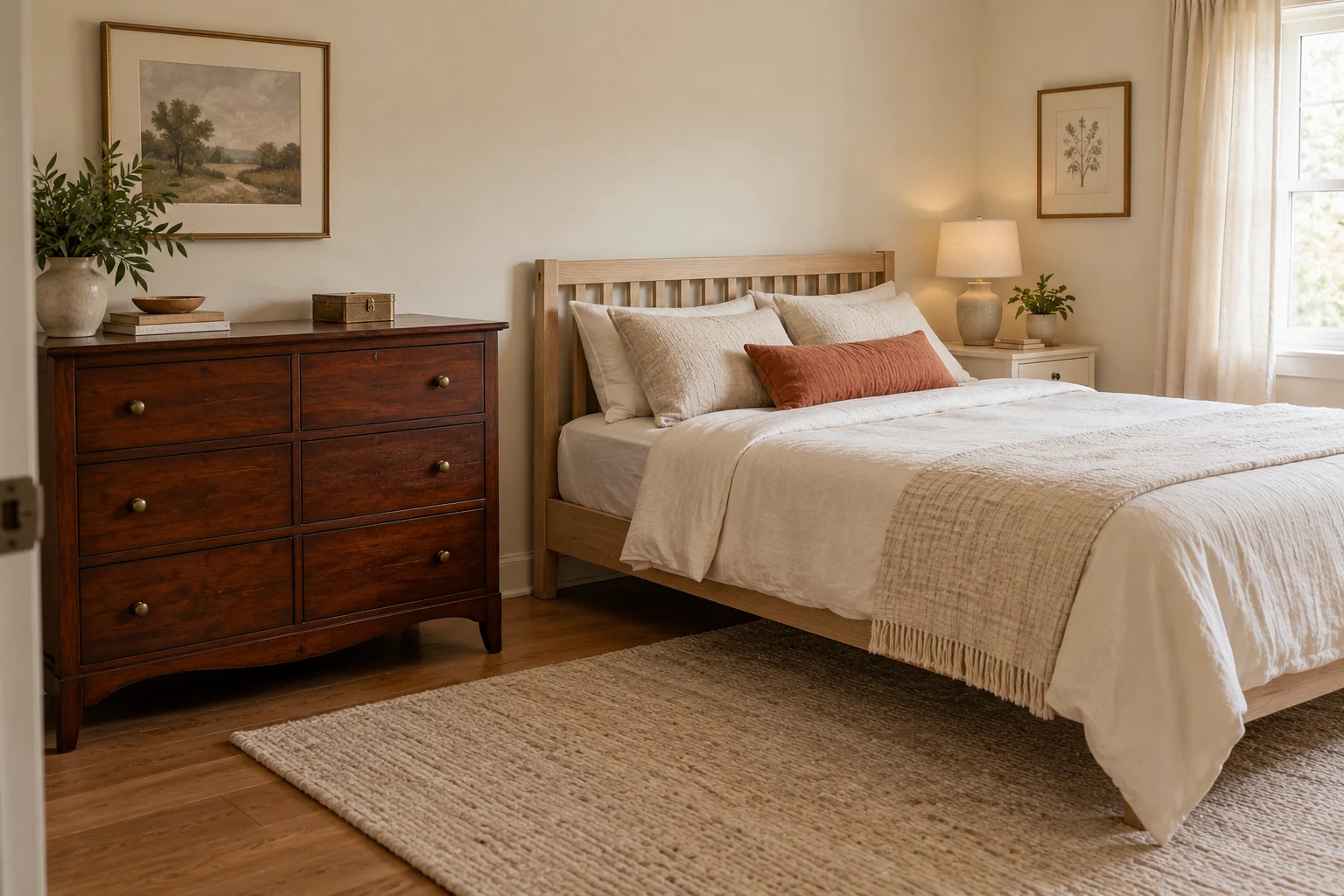
Studio McGee’s bedroom pairing advice includes combinations of different wood tones and materials. Use the pairings to compare possibilities while keeping your own furniture in mind.
For new nightstands, look at the finishes directly beside the bed, then include the dresser in the comparison. Repeating the dresser might connect the two parts of the room; repeating the bed might give you a closer relationship around the pillows and lamps.
Check what each sleeper needs before choosing the finish. A beautiful table with too little storage or an awkward surface height won’t become more useful because its color works. If space beside the bed is the real constraint, our guide to nightstand alternatives when there’s no room helps you decide which functions need a separate surface.
05
Connect the pieces with textiles already in the room
Before adding another wooden object, look at the bedding, rug and curtains you have. You may already have a color repeated between the furniture and textiles: a brown stripe in a rug, a muted warm color in the bedding, or a darker border on a curtain.
Notice whether those colors help you like the furniture together. You may prefer plain bedding beside several different pieces, without a pattern that contains every brown in the room.
If you’re unsure what’s bothering you, change one removable element at a time. Try the bedding you already own before deciding you need a new rug or more accessories. Keep the wood furniture unchanged during that comparison. You’ll have a clearer sense of whether you want a different furniture finish or simply a different textile beside it.
06
Check the whole room before choosing the new piece
Once you have two plausible finishes, compare both against all the pieces staying. A small sample helps with color, but also look at the candidate’s full shape and the amount of its finish you’ll see. Ask the seller how representative the sample is of the finished piece; don’t treat it as a guarantee of an exact match. A broad dresser front is a different choice from a narrow bedside table in the same brown.
Confirm the practical fit separately. Check the storage, complete footprint, door and drawer movement, and the space where you’ll stand to use it. Our guide to placing a dresser so its drawers still open covers that part of the decision.
Before ordering, describe why you prefer the finish: it connects with the bed, repeats the bedside furniture, or adds a contrast you enjoy. If the choice seems to require replacing several useful pieces, compare the other candidate again.